Technology

FMCG Supply Chains and the Rise of New-Age Sales Channels

FMCG Supply Chains and the Rise of New-Age Sales Channels

FMCG Supply Chains and the Rise of New-Age Sales Channels 1920 1080 qwixpertadmin

A Supply Chain Head of an FMCG company recently shared three seemingly unrelated concerns. Inventory levels were at a record high, yet key SKUs continued to go out of stock on quick commerce platforms. Marketplace sales were growing rapidly, but fulfilment costs and returns were eroding margins faster than anticipated. Meanwhile, warehouse teams that had successfully supported General Trade and Modern Trade for years were struggling to cope with the growing volume of small, fragmented orders from e-commerce and DTC channels.

If these challenges sound familiar, you are not alone.

For decades, FMCG supply chains were designed around a relatively predictable operating model. Products moved from factories to warehouses, distributors, retailers, and finally consumers. Success depended on manufacturing efficiency, distribution reach, inventory availability, and cost control. General Trade (GT) and, later, Modern Trade (MT) became the backbone of this model, enabling companies to scale through standardised planning and replenishment processes. That world is rapidly changing.

The rise of e-commerce marketplaces, quick commerce, B2B e-commerce platforms, and Direct-to-Consumer (DTC) channels has fundamentally altered how products are sold, fulfilled, and replenished. While these channels have opened new avenues for growth, they have also introduced a level of supply chain complexity that many FMCG organisations are struggling to manage.

The challenge is no longer about moving large quantities of products efficiently. It is about fulfilling thousands of fragmented demand signals accurately, quickly, and profitably across an increasingly complex channel ecosystem.

Why New-Age Channels Are Different

Traditional GT and MT channels operate on aggregated demand. Orders are typically placed in case quantities, replenishment cycles are predictable, and distributors often absorb inventory and demand variability.

New-age channels operate very differently. Demand is visible in real time, service failures are immediately measured, and supply chain performance directly impacts sales visibility. A stock-out on a marketplace listing can reduce search rankings. A missed replenishment to a quick commerce dark store can result in lost sales within hours. A delayed DTC order can negatively affect customer ratings and repeat purchases.

In effect, FMCG supply chains are evolving from bulk logistics networks to precision fulfilment networks.

The Emerging Supply Chain Challenges

Inventory Fragmentation

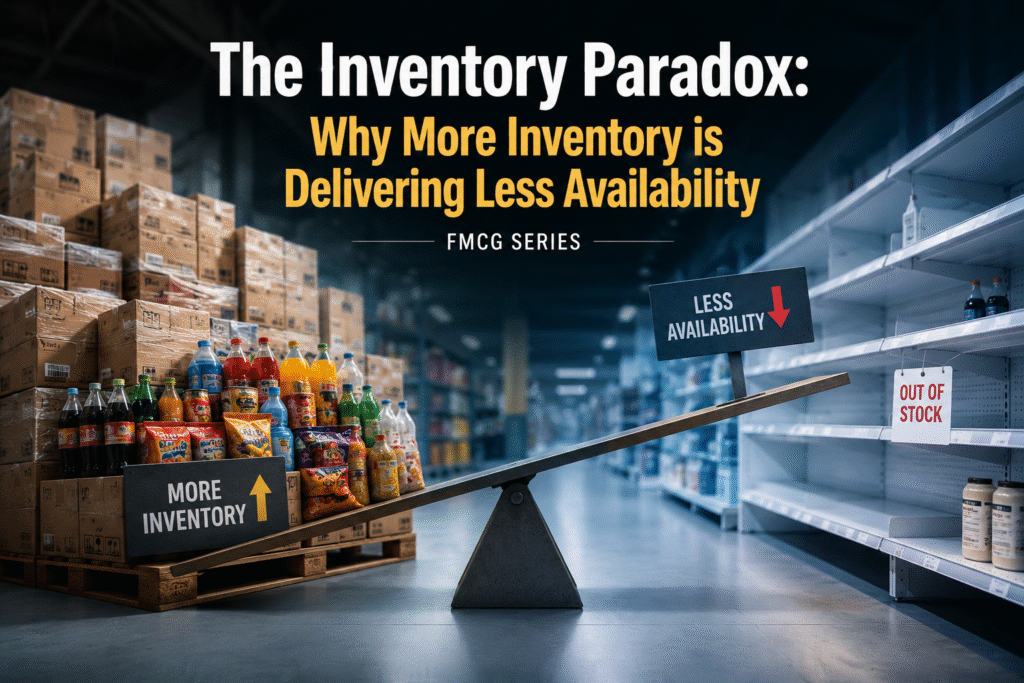
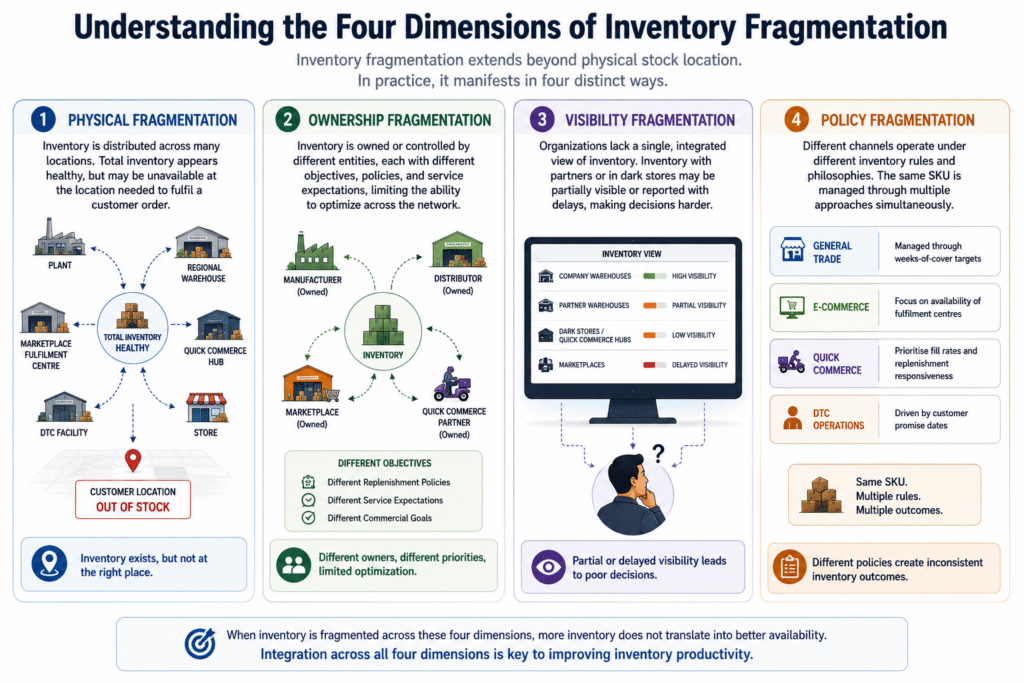
One of the most significant challenges is inventory fragmentation. Inventory is no longer concentrated within plants, depots, and distributor networks. It is spread across marketplace fulfilment centres, quick commerce partner distribution centres, dark stores, DTC warehouses, and traditional trade channels.

This creates multiple inventory pools with limited visibility across the network. Many companies simultaneously experience excess inventory in one channel and stock-outs in another, resulting in higher working capital and lower service levels.

Long Catalogue Complexity

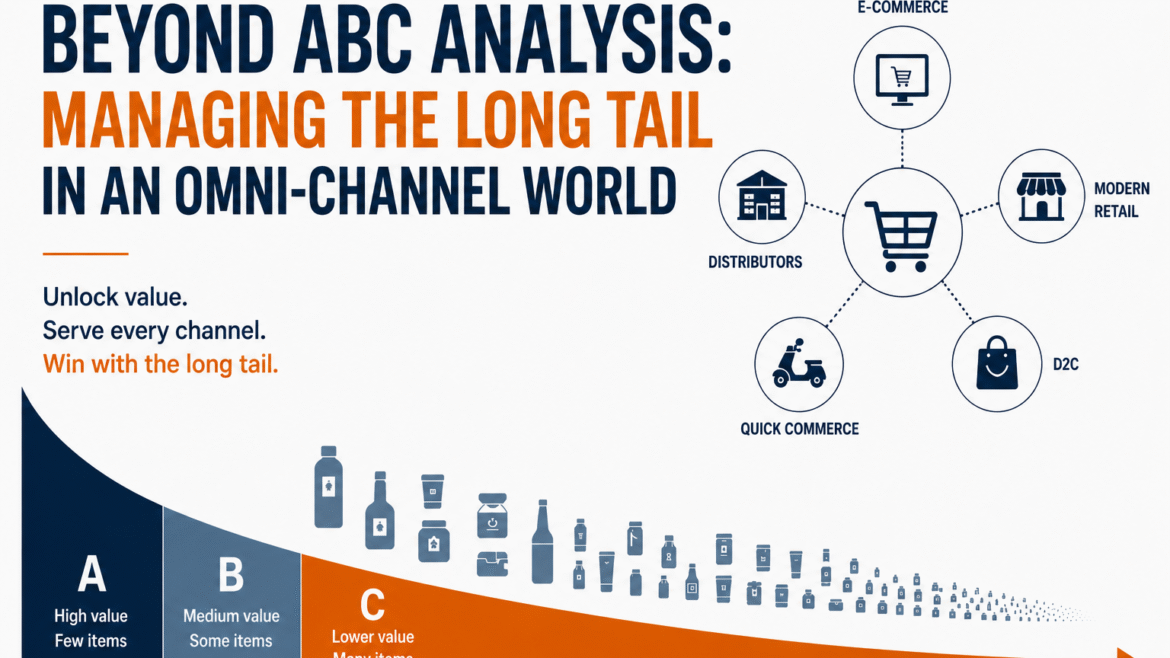
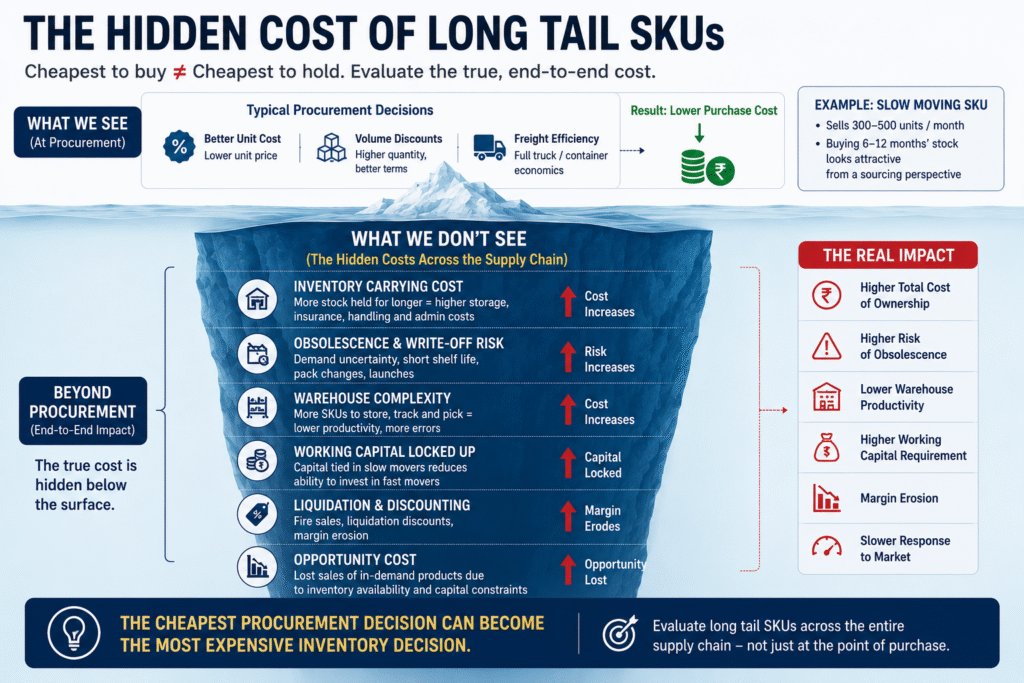
Digital channels encourage broader assortments, channel-exclusive packs, bundles, premium variants, and regional offerings. While this improves consumer choice, it significantly increases forecasting complexity. Slow-moving and long-tail SKUs consume working capital, create warehouse inefficiencies, and increase obsolescence risk. Managing thousands of digital SKUs requires a very different planning capability compared to managing a focused GT portfolio.

Warehouse Operations Designed for the Wrong World

Most FMCG warehouses were built for pallet and case movement. New-age channels demand piece picking, kitting, bundling, labelling, and high order accuracy. Quick commerce further increases complexity through high-frequency replenishment cycles and smaller order quantities. Warehouses must now balance throughput with flexibility, speed, and accuracy.

Appointment Management and Compliance

Marketplace fulfilment centres and quick commerce distribution hubs operate through tightly controlled appointment systems. Missing a delivery slot can delay inventory availability by days or even weeks. In addition, channel-specific requirements around labelling, packaging, barcoding, and documentation create operational complexity that did not exist in traditional trade models.

Returns and Reverse Logistics

Returns were historically limited within FMCG supply chains. Digital channels have changed this reality. Consumer returns, rejected deliveries, expiry returns, and damaged shipments have become meaningful cost drivers. Reverse logistics processes often lack visibility, creating additional write-offs and operational effort.

OTIF as a Commercial Lever

On-Time-In-Full (OTIF) performance has moved beyond an operational metric. It has become a commercial requirement. Poor service levels can result in penalties, listing suppression, reduced visibility, chargebacks, and even SKU delisting. Unlike traditional trade, where relationships often provide flexibility, digital platforms operate through automated scorecards and service-level agreements.

How Mature Is Your Omni-Channel Supply Chain?

The shift in channel mix is forcing organisations to rethink the very purpose of supply chain management. Historically, the channels have evolved as given below:

EraDominant Business ModelSupply Chain Objective
1990–2010General TradeReach and Availability
2010–2020Modern TradeAvailability and Efficiency
2020–PresentOmni-ChannelAvailability, Speed and Accuracy
EmergingQuick Commerce & DTCAvailability, Speed, Accuracy and Agility

As channels evolve, supply chains must evolve with them. Organisations that continue to manage digital channels using GT-era processes will increasingly struggle with service levels, inventory productivity, and profitability.

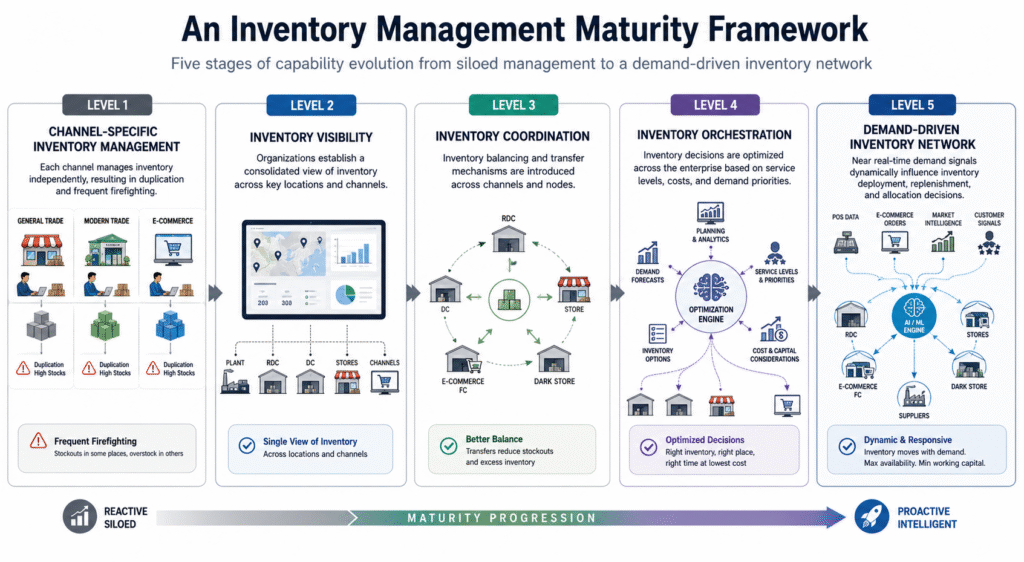
Qwixpert has classified the supply chain maturity of the FMCG industry from level 1 to level 5 as follows:

LevelCharacteristicsTypical Symptoms
Level 1:
Channel-Specific Operations
GT, MT, E-commerce and Q-Commerce managed independentlyInventory duplication, firefighting, frequent stock-outs
Level 2:
Coordinated Planning
Shared forecasting and periodic inventory reviewsImproved visibility but still reactive
Level 3:
Integrated Fulfilment Network
Common inventory view, channel allocation rules, standard OTIF governanceBetter service and lower working capital
Level 4:
Demand-Driven Supply Chain
Near real-time replenishment, dynamic inventory balancing, demand sensingFaster response to channel volatility
Level 5:
Demand Driven Enterprise
Promise dates driven by inventory, capacity, constraints and service prioritiesCompetitive advantage through service, speed and working capital efficiency

Many companies are still in the early stages of this transformation.

The most successful organisations are increasingly moving beyond inventory planning toward integrated decision-making across inventory, capacity, fulfilment, and customer service. The most advanced Demand-Driven Enterprises are increasingly adopting Available-to-Promise (ATP) and Capable-to-Promise (CTP) capabilities to make inventory and capacity commitments dynamically across channels.

What We Commonly Observe

Across consumer goods, food and beverages, personal care, fashion, consumer durables, retail, and aftermarket supply chains, several recurring themes emerge. GT-centric planning continues to dominate despite rapid growth in digital channels. Inventory visibility remains fragmented across multiple nodes. Warehouses struggle to support unit-level fulfilment. OTIF measurement differs across channels. Most importantly, organisations often lack a clear understanding of the true cost-to-serve each channel. These challenges are not operational exceptions—they are becoming structural realities of the modern FMCG landscape.

Conclusion

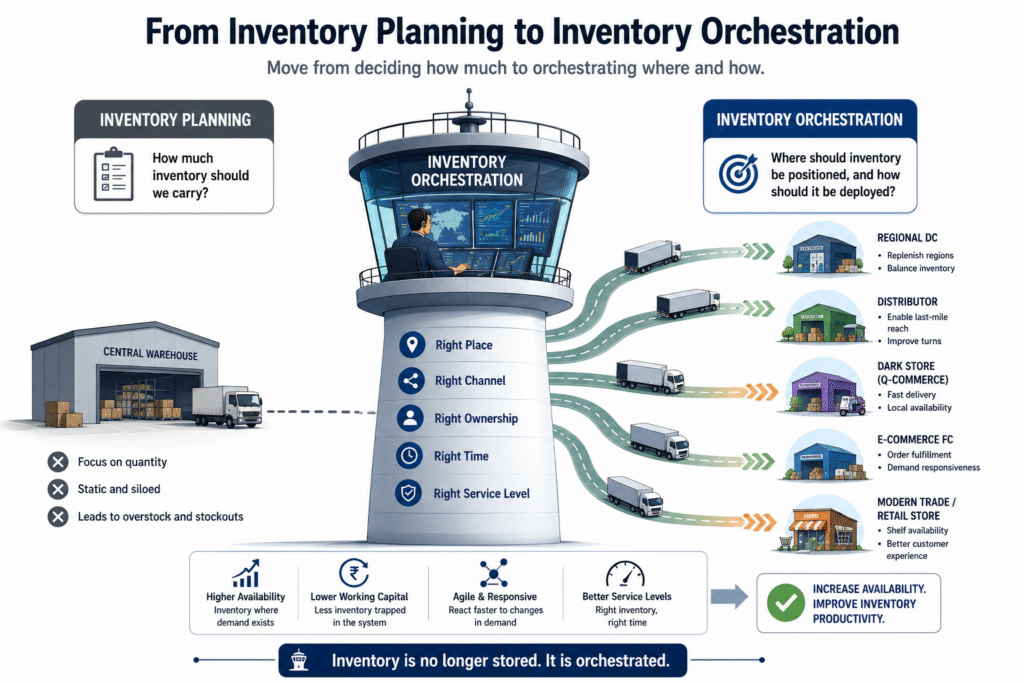
The next decade of FMCG supply chains will not be won by organisations that simply move the most inventory. It will be won by those who can orchestrate inventory, fulfilment, capacity, and service seamlessly across an increasingly fragmented channel ecosystem.

As new-age channels continue to grow, supply chain excellence will increasingly be defined not by scale alone, but by the ability to balance availability, speed, accuracy, agility, and profitability simultaneously.

About the Authors

Qwixpert is a boutique management consulting firm focused on supply chain and operations transformation. The team has worked across FMCG, food and beverages, personal care, retail, fashion, consumer durables, automotive aftermarket, industrial products, and e-commerce sectors, helping organisations improve planning, inventory, warehousing, logistics, network design, and fulfilment performance.

Through engagements spanning traditional trade, modern trade, e-commerce marketplaces, quick commerce, DTC, and B2B channels, the team has observed first-hand how channel evolution is reshaping supply chain operating models and creating new demands on planning, inventory, warehousing, and service execution.

Spare Parts

Unlocking Lifetime Value for OEM’s: Machine Tracking Strategy

Unlocking Lifetime Value for OEM’s: Machine Tracking Strategy 600 450 qwixpertadmin

Strategic Context

The OEM’s relationship with a customer should not end at the point of sale of equipment—in fact, that’s when the value creation begins. In the construction and industrial machine sectors, the initial machine sale typically contributes just 10 – 15% of the company profit, while aftermarket services (parts, AMCs, rebuilds) can contribute upto 50–70%, if captured effectively.

Yet today, most OEMs treat the aftermarket as a siloed sales function rather than a strategic lever to drive lifetime value. This results in lost visibility, missed parts revenue, and limited brand loyalty, especially once the machine changes hands or exits warranty.

The visual below outlines a five-step roadmap to unlock lifetime value across the machine lifecycle – from first sale to long-term retention:


In this article, we focus on aftermarket monetization—an underleveraged yet high-margin lever available to OEMs.

The opportunity is especially critical in high-capex, long-life (15+ years) and business-critical machines used in mining, power generation, construction or marine transportation where uptime directly impacts customers operations and hence revenue. These machines often operate in high-wear environments: extreme temperature, pressure and corrosive environments making OEM-grade support essential and monetizable.

Qwixpert has developed and deployed a structured, end-to-end approach to help OEMs unlock this opportunity—by connecting machine tracking with delightful customer experience that will boost aftermarket sales.

Qwixpert’s Aftermarket Enablement Framework

The graphic below outlines an approach built to convert lost visibility into profitable aftermarket outcomes:

Step 0 and 1:  Reclaim Visibility – Locate Machines and Develop Machine Base

Industrial and construction machines typically lasts 10–15 years, with over 60–70% of the active fleet more than 3 years old. However, this is when OEM visibility tends to decline due to factors such as: ownership changes, fragmented or outdated data systems, staff attrition, and poor-quality legacy sales records.

To restore machine-level visibility across the network, there are three core activities that should be undertaken:

Step – 0 is a one-time foundational activity that requires cross-functional collaboration between Unit sales and Aftermarket team. This should be backed by a strong validation protocol to ensure that the data captured is clean and actionable without which the activity can be ineffective.

Step 2: Anticipate Demand – Track Usage and Plan Interventions

Unplanned downtime is among the costliest risks for machine users; for instance a mid-sized excavator failure on a critical site can lead to significant loss due to delays, idle labour, and penalties. To avoid this, most customers ensure timely replacement of parts either from OEM or other manufacturers. OEM’s often miss this opportunity due to lack of visibility on how machines are being used and when the parts are likely to fail.

To bridge this gap, the OEM’s can leverage on the data base to develop a prediction algorithm:

Illustration:

Illustration of a plastic moulding machine parts identification and prediction

Development of a prediction algorithm that generates trigger to field team will help OEMs stay ahead of failures, drive timely parts revenue, and strengthen their role as uptime partners.

Step 3: Drive Engagement – Monetise Through Targeted Aftermarket Actions

OEM’s often rely on generic reminders or dealer push to drive parts and service sales; but by leveraging the intelligence generated in Step 2, OEM’s can deliver proactive engagements and personalised offerings such as timely ‘nudge’ as machine nears service date or AMC proposals based on actual usage of machine will lead to better conversions.

A key success factor is timely response of the field team to the trigger and operations teams support to ensure availability of the part. Further, to ensure sustained success of this function, customer interactions (part sales, service visit or unfulfilled order) should be fed back into the analytical engine in order to improve it’s performance.

Illustrative flow for Maintenance Triggers

Qwixpert partnered with a leading construction equipment OEM to enable trigger-based customer outreach for oil and lubricant sales.
By identifying machines approaching service thresholds and driving timely, targeted engagement, the initiative expanded aftermarket coverage—bringing ~25% machines into the service funnel and boosting lubricant sales by over 12%.

Case Study

Conclusion: From Visibility to Value

As industrial and construction machines OEMs look beyond the initial sale, aftermarket monetization is no longer optional—it’s the primary path to margin growth and customer loyalty. Yet realizing this opportunity requires more than better data. Qwixpert has worked with leading OEM to operationalize this playbook—tracking machines in the field, building outreach processes, and enabling behavioural change through org structures, training, and system design. Our engagements indicated a potential to unlock a jump in aftermarket revenue, while positioning the OEM as a long-term uptime partner.


Leveraging analytics to increase sales conversions and improve lead sourcing

Leveraging analytics to increase sales conversions and improve lead sourcing 1171 390 qwixpertadmin

Executive summary

Lead prioritization model is a predictive algorithm to score and classify leads. Primarily used by sales organizations to segregate buyers from non-buyers. Model accuracy and implementation effectiveness determine the success of “Lead Prioritization”. Organizations use a threshold-based approach or a descending order approach to target potential customers. Data maturity, risk taking ability and organization’s culture are all key factors in the choice of approach. As market disruptions are constant, effective on-ground implementation, periodic governance and timely model refresh are essential for sustained best results. Apart from focusing on the right leads, marketing can extract target customer profiles from the algorithm to invigorate their lead generation mechanisms. “Lead prioritization” can be extended across functions – Eg: after-sales service – identifying the customers who are likely to need service. Today’s and tomorrow’s business leaders are increasingly harnessing data to power business strategy. Lead prioritization is often the first step to unlocking the potential of predictive analytics. Have you taken the leap?

What is being solved for?

Before becoming a customer, a prospect is part of a sales pipeline in the form of a lead. While leads go through a specific journey to become customers, not all leads end up as one. With the bandwidth of sales teams physically limited, organizations across the world are looking out for intelligent solutions to generate the maximum out of their sales pipelines. A key metric which is tracked across organizations, is lead to sales conversion. Sales and marketing teams which own this metric are constrained by three questions on the path to achieving targeted conversion rates.

  1. How to ensure every potential customer is attended to? – Minimize opportunity loss
  2. How to optimize sales force bandwidth and improve effectiveness? – Maximize productivity
  3. How to generate as many qualified enquiries as possible? – Improved sourcing

“Lead Prioritization” answers these questions while achieving the stated objective of conversion rate improvement.

Why will it be more effective than existing experience-based practices?

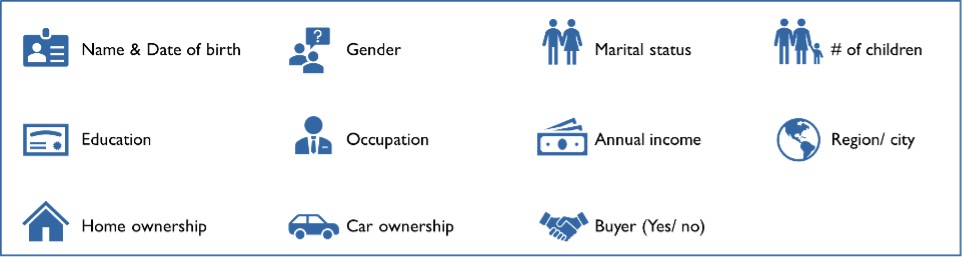
Lead prioritization is a methodology to score and target leads basis their business potential (probability of conversion). Sales and marketing teams collect several customer information (demographic, socio-economic, psychographic etc.) at the time of lead generation. In most organizations, teams use one or a few of these data points to target leads. Often, this approach is different across personnel, geographies and largely derived from their past experiences. And almost always, this knowledge and its impact is limited due to one of many reasons

  1. Knowledge is restricted to the user’s intuition
  2. Knowledge is restricted for reasons of internal competitiveness
  3. Decision making does not include all necessary variables and hence the impact is muted

Fig 1: Sample customer information collected during lead generation

Implementation of a “Lead prioritization” algorithm overcomes all these challenges and institutionalizes a data driven decision making culture.

What is a lead prioritization algorithm?

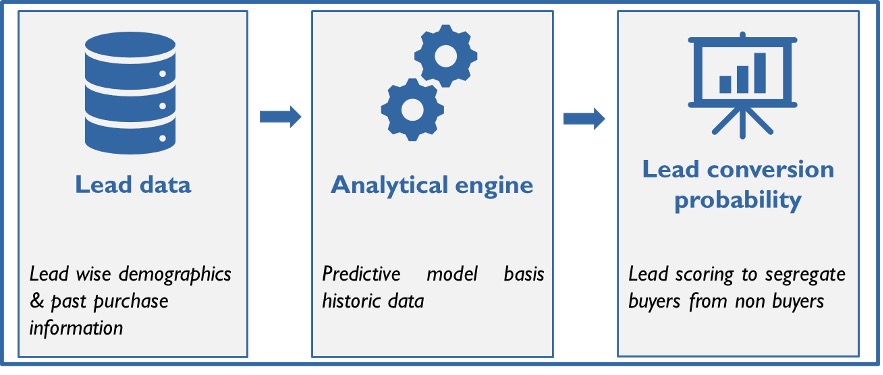
At its heart, the predictive algorithm analyses past data (old sales pipeline) to draw customer profiles, compares them with the current sales pipeline and “scores” each lead. Lead “score” reflects the probability of a lead to convert to a sale.

Fig 2: Lead prioritization algorithm working

In our experience implementing this algorithm, the best results have been obtained when the model receives real-time feedback and the prediction equation is fine tuned constantly on a periodic basis. This is primarily because customer needs, aspirations and market forces all change over time. A model based on one-time analysis cannot keep pace with these changes. Effective organizations engage constantly with the algorithm. They have a robust review system with scorecards and feedback loops to evaluate the model performance, assimilate new variables and drop ineffective variable to calibrate the algorithm to perfection.

The success or failure of the lead prioritization algorithm is a combination of 2 elements – the accuracy of prediction and the effectiveness of its use in decision making. It is common to see accuracies in the range of 70% at the time of initiation. Model accuracy is sharpened over time with real-time feedback and improved to ~90% and above.

In our experience implementing this algorithm, the best results have been obtained when the model receives real-time feedback and the prediction equation is finetuned constantly on a periodic basis. This is primarily because customer needs and aspirations and market forces all change over time and a model based on one-time analysis cannot keep pace with these changes.

Effective organizations engage constantly with the algorithm. They have a robust review system with scorecards and feedback loops to evaluate the model performance, assimilate new variables and drop ineffective variable to calibrate the algorithm to perfection.

Ok, so now that leads have been scored, what next?

Two approaches are widely practiced. Organization’s culture is critical in determining the most suitable approach

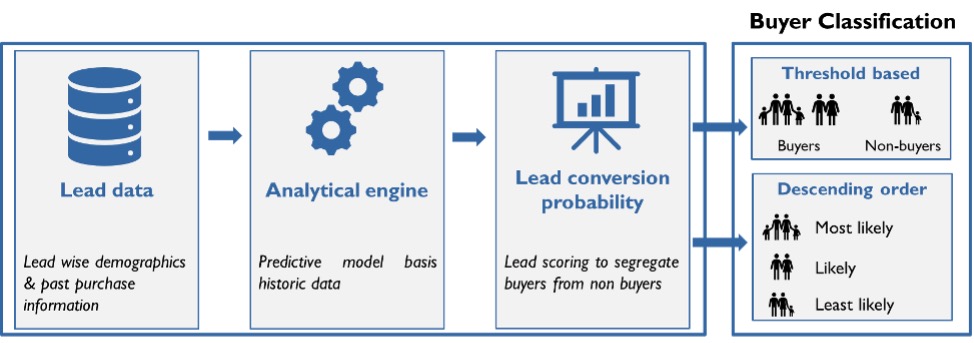
Approach 1: Threshold based

This approach uses the lead scores to bucket them into 2 distinct categories – Buyers and Non-buyers. A score threshold is administered to aggregate leads into “Buyer” or “Non-buyer” categories. The success or failure of this model is determined by its accuracy – What is the % of true positives (actual buyers who are classified as buyers) and true negatives (actual non-buyers who are classified as non-buyers)?

The approach instructs the sales teams to specifically focus on one group to get maximum results – while deprioritizing or in some cases neglecting the other group. The model’s capture rate, which determines what % of total buyers have been captured is another important metric to measure the effectiveness of the algorithm.

Organizations should be wary of neglecting one group to uniquely focus on the other. This approach can create a “self-fulfilling prophecy”, thereby losing out on critical feedback from the group classified as “non-buyers” to sharpen the algorithm over time.

Fig 3: Buyer classification approaches

Approach 2: Descending order

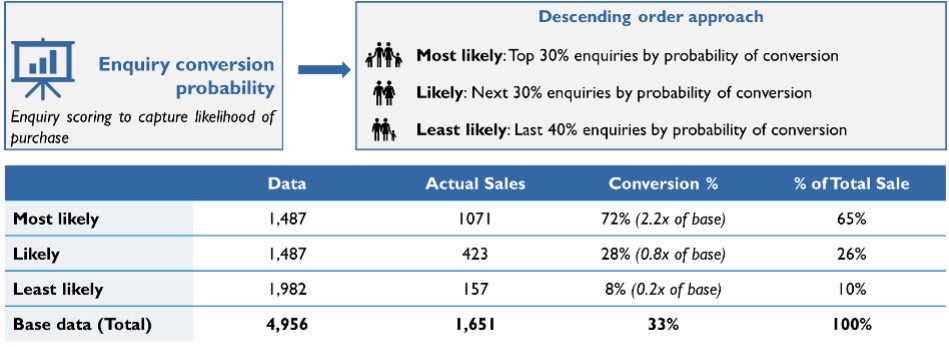
A less risky alternative is to rank and order the leads in the descending order of their scores. It advises the sales teams to order their time and effort basis the predicted scores. This approach is favored by more risk averse organizations as it ensures there is no short-term loss in sale as all leads will be attended to. On the contrary this approach may not make the most judicious use of available sales and marketing resources.

This approach measures conversion and capture rates to evaluate algorithm performance

Fig 4: Illustrative chart on implementation of “Descending order” approach

Organizations, who are lower on data maturity, also tend to take this approach. This awards them the necessary time to sharpen the quality of their data. And in the long-term business leaders have been seen to favor the “threshold based” method.

What can marketing teams take from this model?

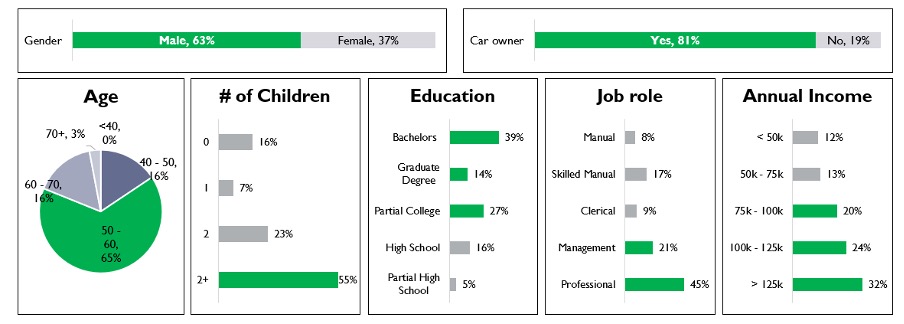
While leads are scored and categorized as “buyers” and “non-buyers”, this classification also helps marketing teams determine the “ideal target customer profile”. The target customer is a combination of the same demographic, socio-economic and psychographic data points used to predict buying behavior. While, the algorithm at the backend, uses this profile to match it with new data and predict their probabilities of conversion, effective organizations use this further to their advantage. Marketing heads extract this intelligence and align their team’s efforts towards campaigns and activations that generate leads most similar to the “ideal target customer profile”. This way, the marketing spend RoI is improved while organically improving sales conversions.

Fig 5: Illustrative target customer profile

Is this algorithm only applicable to sales and marketing?

While, the example of sales has been used to illustrate the lead prioritization algorithm, the use cases are plenty. Functions within an organization can extend the recommendation algorithm to improve efficiency in their roles. Eg: Procurement managers can estimate vendors risk probabilities before deciding on whom to engage with.

Cross industry application is equally possible. Financial organizations have been able to pre-empt frauds and avoid bad debts by rejigging the predictor variable accordingly. After-sales service professionals have delighted customers by forecasting their arrival at workshops and customizing the entire journey – from welcome to vehicle delivery – to their tastes.

Inter-function and inter-industry application of the lead prioritization algorithm is on the rise in the west. And India is not being left behind. Data challenges remain – as the model’s effectiveness is predicated significantly on quality of data. Organizations have begun to understand the benefits that are possible and what they are missing out on by not focusing on data. Higher investments are being seen in data architecture to capture relevant data. Future ready organizations are increasingly investing in predictive algorithms to drive business decisions – and lead prioritization is often the starting point. So, let us leave you with 2 questions. Does your business proactively collect and use data to take business decisions? By now you would have drawn parallels to your organization. So, where and how do you think lead prioritization can fit in?