
Network Optimisation

Why Factory Cost Economics Will Make or Break FMCG Companies in India

The Latent Leak : Why Factory Cost Economics Will Make or Break FMCG Companies in India

The Latent Leak : Why Factory Cost Economics Will Make or Break FMCG Companies in India 1920 1080 qwixpertadmin

When the Numbers Don’t Add Up

Picture this: A mid-sized Pune-based FMCG company manufacturing a popular range of packaged spices and ready-to-cook masalas. Their sales team is hitting targets. Retail shelf presence is growing. The marketing team is buzzing with new campaign ideas. And yet, every quarter review ends with the CFO staring at margins that refuse to budge past 8%, while industry peers are consistently reporting 14-16%.

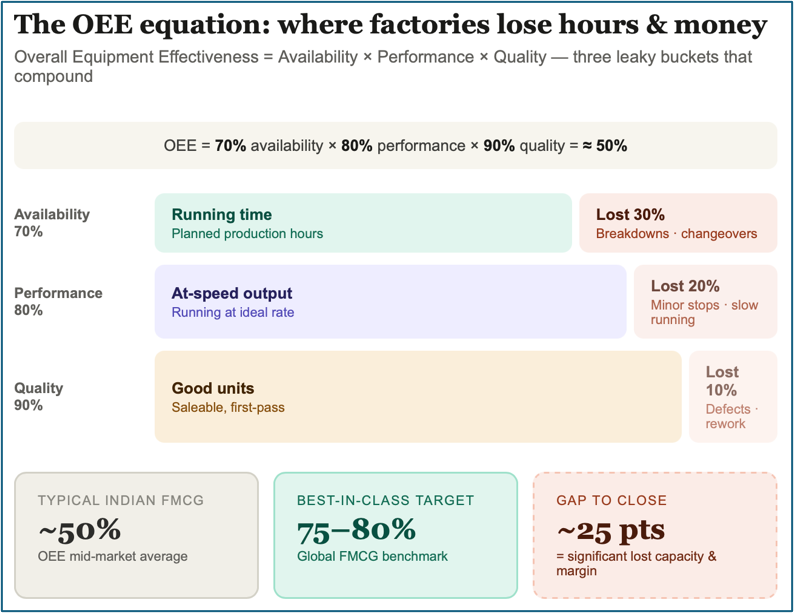
The team blames distributor margins, raw material inflation, GST complexity et al. However, a deeper investigation reveals the uncomfortable truth – ‘the crisis lies inside’.  Conversion cost per kg is 34% higher than the nearest competitor, Overall Equipment Effectiveness (OEE) sits at 51% vis-à-vis leading benchmark of 75-80%, changeover times between SKUs average 4 hrs, yield loss in the blending process has been silently running at 6-7% for years, energy consumption per unit is nearly double to a comparable plant; all absorbed into a catch-all “wastage” line item that no one audits.
It is not a failing company but is one flying blind inside its own factory – and paying dearly for it. This story is not unique. Across India’s FMCG landscape, hundreds of companies, from regional players to large multi-plant enterprises, carry significant hidden cost burdens within their manufacturing operations, simply because factory cost economics has never been treated as a strategic discipline.

How Companies Traditionally Managed Factory Costs

For most of India’s FMCG history – particularly from the liberalisation era through the 2010s – factory cost management, unlike raw material costs, was largely reactive and siloed. The dominant mindset was one of cost containment rather than cost engineering.

Finance teams tracked aggregate budget lines: raw material costs, power and fuel, labour, and overheads. Plant managers focused on throughput – keeping lines running and meeting dispatch targets. The two functions rarely spoke the same language. Finance wanted variance reports; operations wanted production numbers. The cost structure of a factory was treated as essentially fixed, punctuated by annual negotiations with vendors and occasional capital investments in capacity.
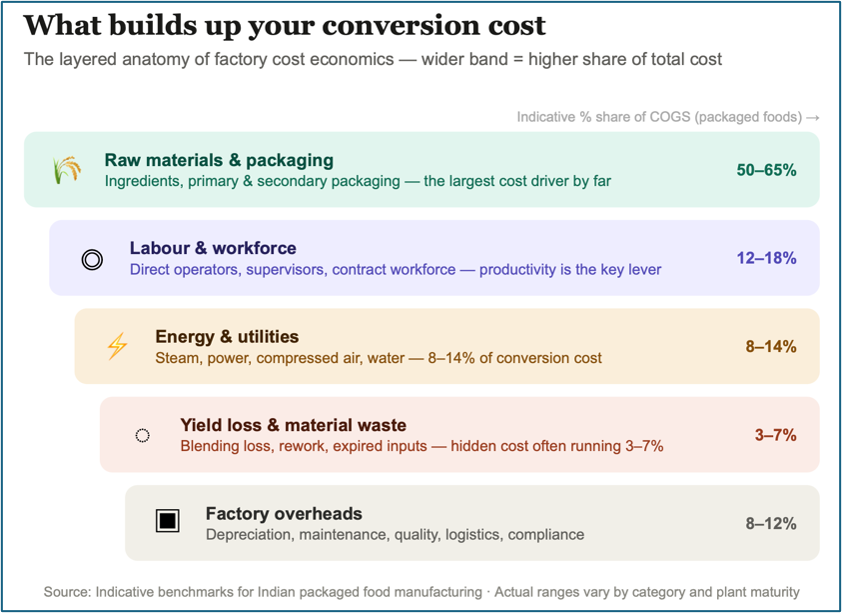
Benchmarking, where it existed, was informal – a plant head comparing notes with a peer at an industry conference, or a consultant’s rule-of-thumb target pulled from a global study with little India-specific context. Standard costing systems were implemented in ERP platforms, but often with assumptions baked in at the time of implementation that were never revisited. A company might technically “know” its standard conversion cost, while being entirely unaware that actual costs had drifted 20-25% above standard over several years.

The tolerance for this ambiguity was enabled by a forgiving macro environment. Rural consumption was growing steadily. Urban premiumisation was expanding category sizes. Input cost cycles, while volatile, were manageable within the pricing power that brand equity afforded. In short, strong top-line growth papered over manufacturing inefficiency. Margins were under pressure, but pressure that could be explained away.

What Has Changed and Why It Can No Longer Be Ignored

The operating environment for FMCG manufacturers in India has shifted structurally, and several forces are converging to make factory cost economics an existential priority rather than a nice-to-have.  Manufacturers within a single FMCG company – both own and contract manufacturers – compete with each other basis the overall cost per unit.
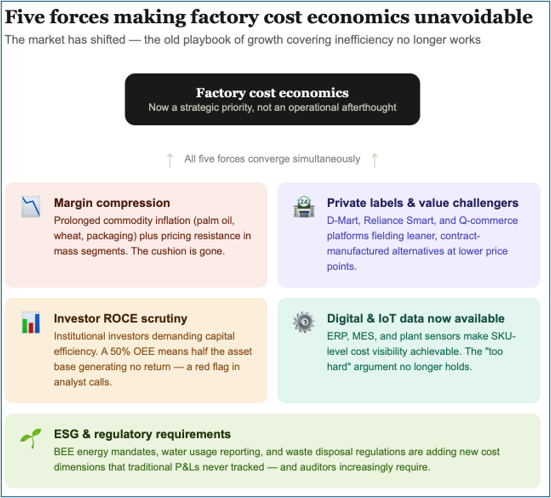
Margin compression is no longer temporary. The post-pandemic years brought a prolonged period of commodity inflation – palm oil, wheat, packaging materials, and fuel all spiked. While commodity prices have partially moderated, input cost volatility has become the new normal. At the same time, competitive intensity has made it increasingly difficult to fully pass on cost increases to consumers through price hikes, particularly in mass and semi-premium segments.

The rise of private labels and value players. Organised retail chains – Reliance Smart, D-Mart, and others – have aggressively expanded private label portfolios. Quick commerce platforms have lowered barriers to entry for challenger brands. These competitors are often leaner by design, built on contract manufacturing arrangements with tightly negotiated conversion costs. Legacy FMCG players cannot compete on price if their cost-to-serve is structurally higher.

Investor scrutiny on capital efficiency. As India’s FMCG sector matures, institutional investors are moving beyond revenue growth metrics to demand ROCE (Return on Capital Employed) improvement. Factories represent the single largest asset on most FMCG balance sheets. An OEE of 50% effectively means half the invested capital is generating no return. This is no longer a footnote – it is a red flag in analyst calls.

Digital and data infrastructure has made granularity possible. The widespread adoption of ERP systems, IoT-enabled plant sensors, and manufacturing execution systems (MES) means that the data required to understand cost at the machine, line, shift, and SKU level now exists – or can be made available at a reasonable investment. There is no longer a credible argument that factory cost visibility is too difficult to achieve.  However, the challenge of getting clean data depends significantly on the maturity of the organization.

Regulatory and sustainability pressures. ESG commitments and Bureau of Energy Efficiency (BEE) mandates are pushing manufacturers to optimise energy consumption. Water usage reporting and waste disposal regulations are adding further cost dimensions that a traditional P&L never tracked rigorously.

The Key Imperatives for Driving Factory Cost Economics

Building genuine capability in factory cost economics requires action across several interconnected dimensions.

Granular cost visibility at the line and SKU level. The first imperative is simply to see clearly. Companies must move beyond plant-level cost aggregates to understand conversion cost per SKU, per line, and per shift. This requires integrating production data with financial systems – a non-trivial exercise, but a foundational one. Without this visibility, every improvement initiative is shooting in the dark.

OEE as a living management metric. Overall Equipment Effectiveness needs to be tracked in near-real-time and cascaded to the shop floor, not compiled monthly for a finance review deck. Availability losses, performance losses, and quality losses must each be addressed with distinct intervention strategies.

Zero-loss thinking in yield and waste. Every gram of raw material that does not become a saleable unit is a cost. Leading FMCG manufacturers globally deploy zero-loss frameworks to systematically identify, quantify, and eliminate yield leakage across the value chain – from intake to filling to packaging.
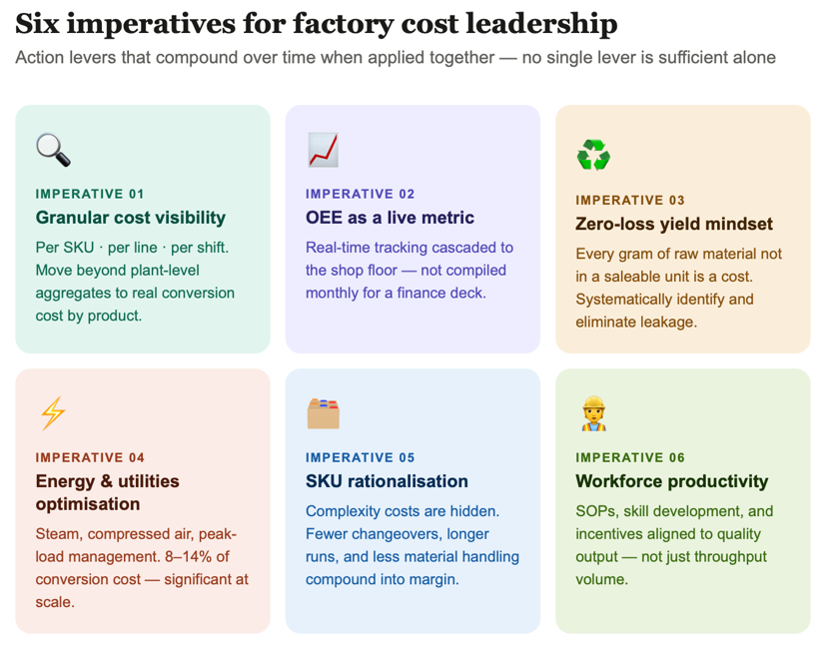
Energy and utilities management. In most food and personal care manufacturing, energy accounts for 8-14% of conversion cost. Steam optimisation, compressed air audits, lighting upgrades, and peak-load management are not glamorous, but they compound significantly at scale.

SKU rationalisation linked to manufacturing complexity. Proliferating SKU portfolios impose hidden complexity costs – more changeovers, shorter runs, higher material handling, greater scheduling friction. Factory cost economics must feed directly into portfolio strategy decisions.

Workforce productivity and capability building. Labour productivity in Indian FMCG manufacturing is highly variable. Structured skill development, standard operating procedures, and incentive alignment between output quality and operator compensation are critical levers.

The Challenges

The path is not without obstacles. The most persistent challenge is cultural – a factory culture where the cost-per-unit is “finance’s problem” and the plant team’s job is simply to produce. Breaking this silo requires sustained leadership commitment and the right incentive structures.

Data quality is a recurring issue. Even companies with ERP systems often find that production reporting is inconsistent, manual entries are error-prone, and the data required to calculate true conversion costs per SKU simply does not exist in a clean form. Building the data foundation is time-consuming and unglamorous work.
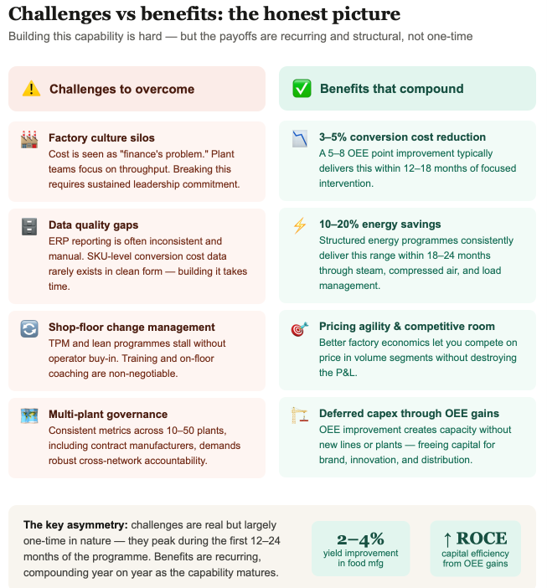
Change management at the plant level is significant. Initiatives like total productive maintenance (TPM) or lean manufacturing require genuine behavioural change from operators and supervisors, not just top-down mandates. Without adequate training and on-the-floor coaching, programmes stall after initial enthusiasm.

Multi-plant coordination is another complexity. Large FMCG companies operate networks of 10, 20, or even 50 plants, often including contract manufacturing partners. Establishing consistent metrics, standards, and accountability across this network requires robust governance.  In addition, an integrated planning to establish which-SKU-to-manufacture-where-and-in-what-quantity is critical, and is nowadays driven through the best commercials offering by the manufacturing setup. Change management at the plant level is significant. Initiatives like total productive maintenance (TPM) or lean manufacturing require genuine behavioural change from operators and supervisors, not just top-down mandates. Without adequate training and on-the-floor coaching, programmes stall after initial enthusiasm.

Multi-plant coordination is another complexity. Large FMCG companies operate networks of 10, 20, or even 50 plants, often including contract manufacturing partners. Establishing consistent metrics, standards, and accountability across this network requires robust governance.  In addition, an integrated planning to establish which-SKU-to-manufacture-where-and-in-what-quantity is critical, and is nowadays driven through the best commercials offering by the manufacturing setup.

The Benefits

The companies that have embedded factory cost economics as a core discipline consistently report compelling outcomes. A 5-8 percentage point improvement in OEE typically translates to a 3-5% reduction in conversion cost – material numbers at FMCG scale. Systematic yield improvement programmes have delivered 2-4% cost reductions in material-intensive categories. Energy optimisation initiatives typically yield 10-20% reduction in energy spend within 18-24 months.

Beyond the direct P&L impact, there are strategic benefits. Better factory economics enable more aggressive pricing in competitive segments without sacrificing margin. They free up capital that would otherwise be spent on premature capacity expansion. They improve agility – a plant with high OEE and short changeover times can respond faster to demand signals.

Most importantly, factory cost visibility creates the foundation for better strategic decisions – about which products to make in-house versus outsource, which plants to invest in, and how to configure a manufacturing network for the next decade of growth.

Conclusion

India’s FMCG sector stands at an inflection point. The era of growth covering up manufacturing inefficiency is ending. As competition intensifies (external and internal), margins tighten, and investors demand capital efficiency, the factory floor is no longer a back-office concern – it is a strategic battleground. Companies that develop genuine capability in factory cost economics will earn structural cost advantages that compound over time, enabling them to invest in brand, innovation, and distribution from a position of strength. Those that continue to fly blind, risk finding themselves permanently disadvantaged – not because of strategy, not because of brands, but because of costs they never thought to measure. The good news is that the tools, data, and methodologies to build this capability are available today. The question is simply whether the organisation has the will to look.
Beyond ABC Analysis: Managing the Long Tail in an Omni-Channel World

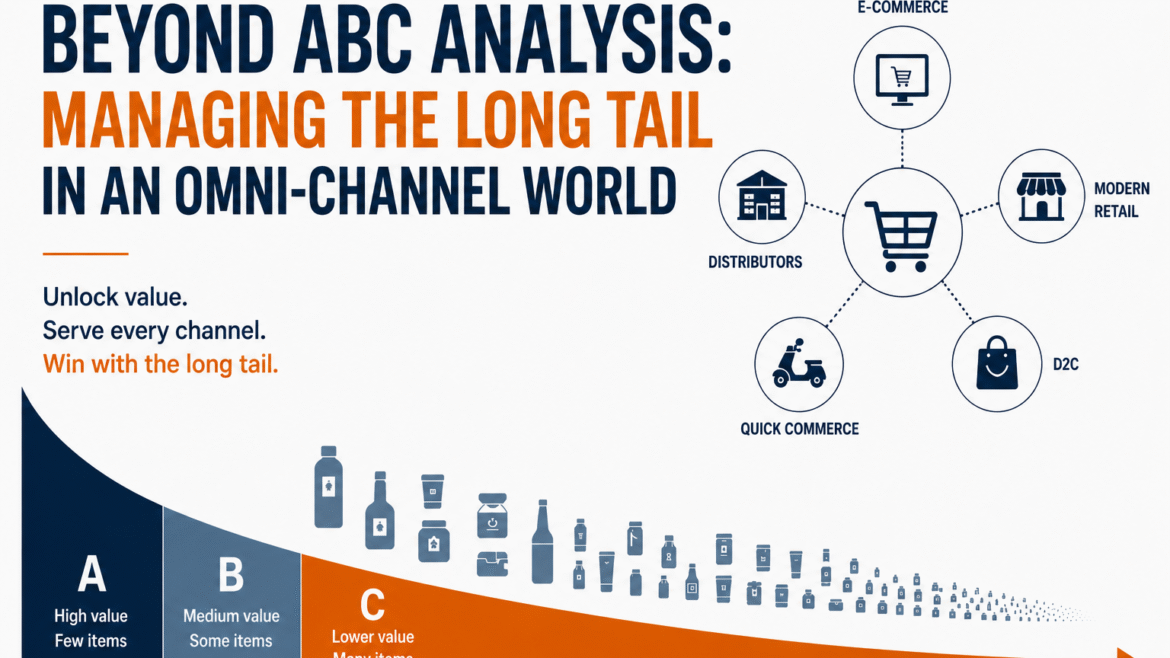
Beyond ABC Analysis: Managing the Long Tail in an Omni-Channel World

Beyond ABC Analysis: Managing the Long Tail in an Omni-Channel World 1536 1024 qwixpertadmin

A common complaint among FMCG supply chain leaders today sounds something like this:

“Our inventory is higher than ever, warehouse space is under pressure, and yet we continue to face stock-outs on key digital channels.”

At first glance, these issues appear unrelated. However, in many organisations, they stem from the same underlying challenge: the growing long tail of SKUs created by e-commerce marketplaces, quick commerce, and Direct-to-Consumer (DTC) channels.

For decades, FMCG supply chains were built around a relatively concentrated product portfolio. General Trade (GT) and Modern Trade (MT) naturally filtered assortments. Shelf space was limited, distributors focused on fast-moving products, and planning teams could concentrate on a manageable set of high-volume SKUs.

The emergence of digital channels has changed that equation. Every flavour, pack size, variant, bundle, gift pack, regional assortment, and limited-edition product can now be listed online. Consumers expect choice, and digital platforms reward breadth of assortment. As a result, SKU counts have grown significantly across many FMCG categories.

The challenge is that while the revenue opportunity from the long tail is real, managing these SKUs using traditional planning and inventory policies can create substantial operational and financial inefficiencies.

The Problem is Not the Long Tail

Many organisations respond to growing SKU complexity by launching SKU rationalisation exercises. While rationalisation has its place, it is often an incomplete solution.

Not every low-volume SKU is a bad SKU. Some products play an important role in attracting consumers to digital platforms. Others serve niche but profitable customer segments. Certain SKUs support premium positioning, seasonal campaigns, or new product launches. Eliminating them purely because they have lower volumes may hurt growth more than it helps efficiency.

The real problem is not the existence of long-tail SKUs. The problem is managing them using the same planning, sourcing, inventory, and service policies as fast movers. In other words, the future of long-tail management is not aggressive SKU reduction. It is differentiated management.

Why Traditional ABC Analysis is No Longer Enough

Most supply chains still rely heavily on ABC analysis: Fast movers become A-items, Medium movers become B-items, and Slow movers become C-items.

While useful, this approach was designed for a simpler world. Today’s omni-channel environment requires a richer understanding of SKU behaviour. A slow-moving SKU can still be strategically important. A seasonal product may have low annual volume but extremely high demand concentration during specific periods. A marketplace-exclusive pack may contribute little revenue but help improve search visibility and consumer acquisition. Treating all slow-moving products the same often leads to poor decisions.

Traditional ABC analysis answers only one question: How much does a SKU sell? Unfortunately, modern supply chains need to answer several additional questions. Is demand predictable? Is the SKU strategically important? Does it carry high obsolescence risk? Does it move frequently enough to justify frequent replenishment? These questions require a broader classification framework than sales volume alone.

A More Practical Framework for Long-Tail Management

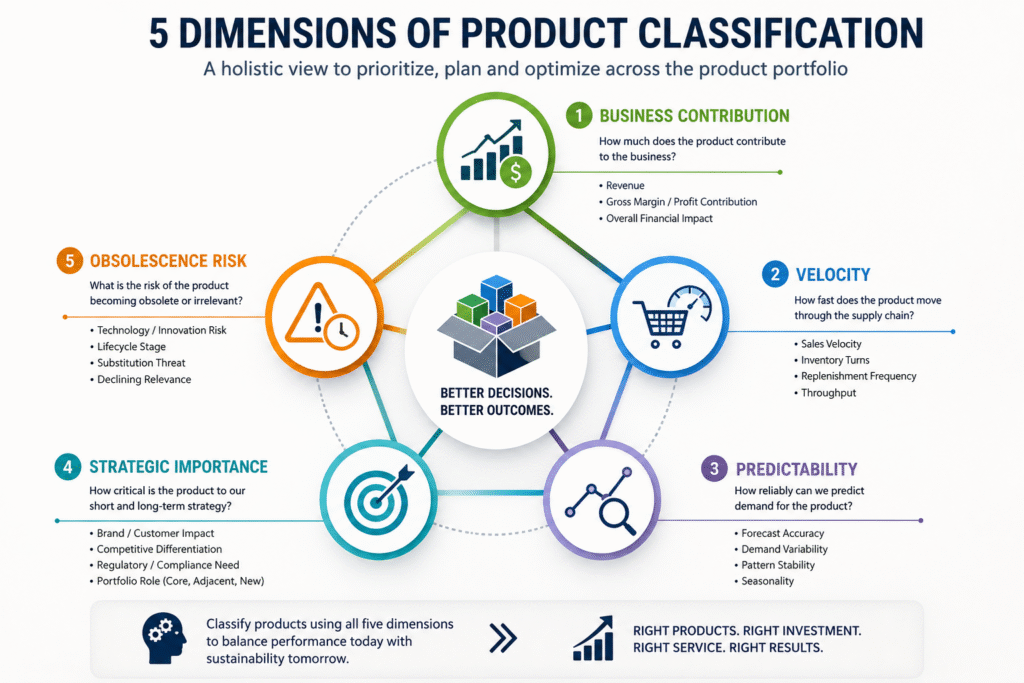
Instead of classifying products solely by volume, organisations should evaluate SKUs across five dimensions.

1. Business Contribution

How much does the SKU contribute to the revenue? This is a traditional ABC Pareto analysis, with A, B, and C category SKUs contributing 80%, 15%, and 5% of revenue, respectively. This classification helps the planner identify the SKUs that drive sales. The exact cut-off could be modified to 60-30-10 or 70-20-10 depending on the business. In some of the businesses, profit contribution is considered instead of revenue.

2. Velocity

How quickly does the SKU move? Velocity is usually measured using the frequency of the orders. Another term the industry uses is “runner,” “repeater,” or “stranger.” This remains important because velocity directly influences inventory turns, replenishment frequency, and warehouse handling requirements.

3. Predictability

How stable is demand? This is measured by the uniformity of the orders throughout the year. Some products exhibit consistent demand patterns while others are highly seasonal, promotion-driven, or event-driven. SKUs could be classified as regular, irregular, seasonal, or sporadic. Similarly, if the SKU is forecastable or non-forecastable. Two SKUs with identical annual volumes may require completely different inventory policies if their demand profiles differ.

4. Strategic Importance

What role does the SKU play in the portfolio? Certain products may be critical despite low sales volumes. Examples include premium variants, marketplace exclusives, hero products, or strategic new launches. Revenue contribution alone does not determine business importance. Often, there are flagship products that define the company’s competitive position. Sometimes, the product needs to be planned as part of portfolio completion.

5. Obsolescence Risk

How likely is inventory to become unsellable? This is particularly relevant in FMCG categories with shelf-life constraints. Low-velocity products with short shelf life require very different planning policies than low-velocity products with long shelf life.

These five dimensions create a more meaningful basis for segmentation and decision-making than traditional ABC analysis alone.

The Hidden Cost of Long-Tail SKUs 

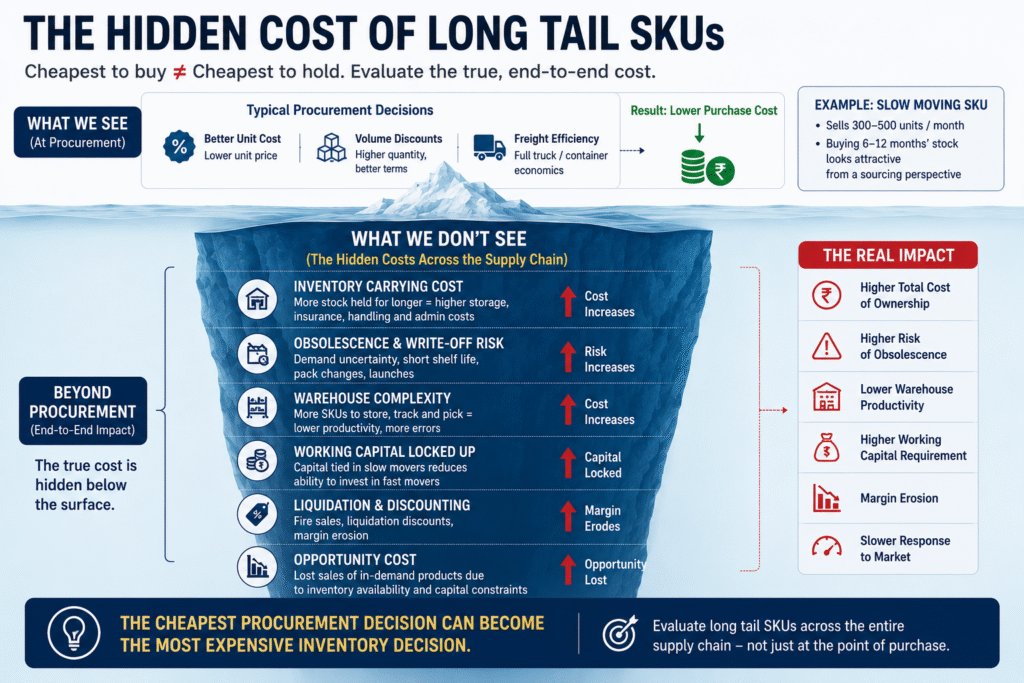
One of the most common mistakes organisations make is focusing exclusively on procurement economics. 

Procurement teams often seek larger purchase quantities to improve unit costs, secure volume discounts, or optimise freight economics. While this may reduce purchase costs, it can significantly increase inventory carrying costs, obsolescence risk, warehouse complexity, and working capital requirements. 

In many situations, the cheapest procurement decision becomes the most expensive inventory decision. In many situations, the cheapest procurement decision becomes the most expensive inventory decision.

Purchasing six or twelve months of inventory may appear attractive from a sourcing perspective. However, the resulting inventory exposure can lead to write-offs, liquidation discounts, excess warehouse occupancy, and capital locked in stock that may never be sold. 

Every additional long-tail SKU also consumes planning bandwidth through forecasting, exception management, parameter maintenance and master data administration. 


The economics of long-tail products must therefore be evaluated across the entire supply chain rather than within procurement alone.

Different SKUs Require Different Service Levels

Another common practice is applying similar service targets across the portfolio. Many organisations target 95% availability for virtually all products. While appropriate for core fast-moving products, this approach often creates unnecessary inventory investment for long-tail items.

Service levels should not be determined by sales volume alone. They should reflect the product’s business contribution, lifecycle stage, strategic importance and channel role.

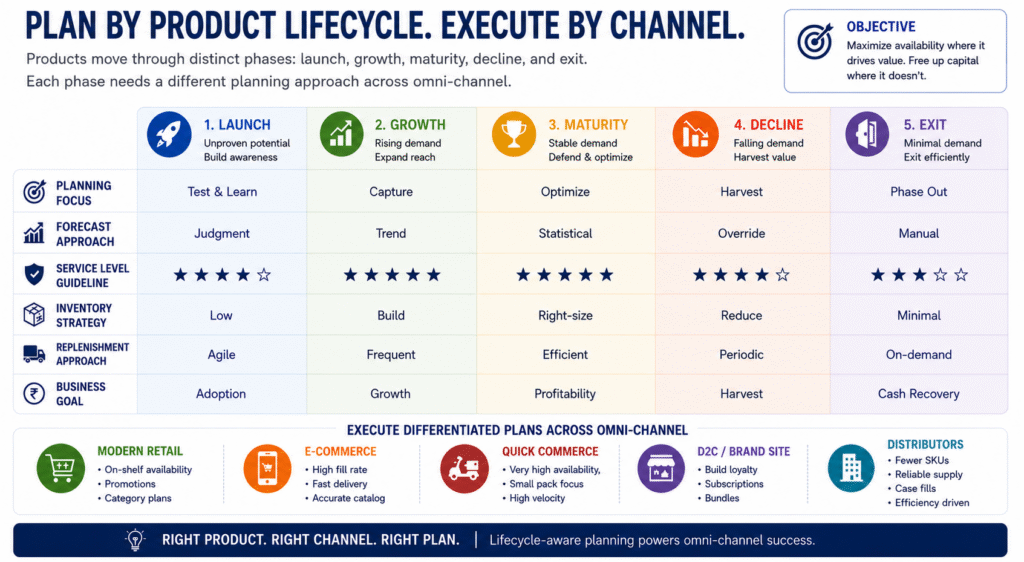
A more effective approach is differentiated service management. Core products may warrant service levels above 90-95%. Growth products may require 95–98%. Strategic niche products may operate at slightly lower levels. Low-priority long-tail products may justify even more selective inventory policies. The product on exit will not even have service level targets and probably will have as low as 30-50% service levels. The objective is not to reduce service indiscriminately. It is to align service expectations with business value.

Lifecycle Management Matters

Perhaps the most overlooked aspect of long-tail management is lifecycle tracking. Products move through distinct phases: launch, growth, maturity, decline, and exit. Yet many organizations continue using the same planning parameters throughout the product’s life.

As products mature and demand patterns change, inventory policies, service levels, replenishment frequencies, and sourcing strategies should evolve accordingly. Lifecycle-driven planning helps organizations reduce obsolescence risk while maintaining availability where it matters most.

Lifecycle transitions should automatically trigger changes in planning parameters rather than relying on manual planner intervention.

What We Commonly Observe 

Across consumer goods, food and beverage, personal care, retail, fashion, and consumer durables sectors, a recurring pattern emerges. Although the exact numbers vary, we frequently observe that roughly 20–25% of SKUs generate most of the revenue, while the remaining long tail drives a disproportionate share of inventory, planning effort and warehouse complexity. 

However, the answer is rarely wholesale rationalisation. Organisations that achieve the best results are those that develop differentiated policies for different SKU segments balancing availability, working capital, service, and profitability according to the characteristics of each product. 

Conclusion 

The growth of e-commerce, quick commerce, and DTC channels has made the long tail a permanent feature of the modern FMCG landscape. Consumers expect choice, and digital platforms reward breadth of assortment. The question is no longer whether organisations should carry long-tail SKUs. The question is how intelligently they manage them. 

The future belongs to companies that move beyond traditional ABC analysis and adopt differentiated approaches to inventory, sourcing, service levels, and lifecycle management. Competitive advantage in an omni-channel world will not come from carrying fewer SKUs. It will come from understanding which SKUs deserve different supply chain policies—and having the discipline to execute them consistently. 

About the Authors

Qwixpert is a boutique management consulting firm focused on building Future-Fit Supply Chains. The firm works with organisations across consumer goods, retail, fashion, industrial products, and aftermarket sectors to improve agility, inventory productivity, fulfilment performance, and supply chain decision-making.

Through more than 100 consulting engagements across 16 industries, the team has observed how digital channels, changing consumer behaviour, and rising service expectations are redefining the role of supply chains.

This article is part of a broader series exploring the implications of these shifts in trade channels and the capabilities organisations need to build for the future.

FMCG Supply Chains and the Rise of New-Age Sales Channels

FMCG Supply Chains and the Rise of New-Age Sales Channels

FMCG Supply Chains and the Rise of New-Age Sales Channels 1920 1080 qwixpertadmin

A Supply Chain Head of an FMCG company recently shared three seemingly unrelated concerns. Inventory levels were at a record high, yet key SKUs continued to go out of stock on quick commerce platforms. Marketplace sales were growing rapidly, but fulfilment costs and returns were eroding margins faster than anticipated. Meanwhile, warehouse teams that had successfully supported General Trade and Modern Trade for years were struggling to cope with the growing volume of small, fragmented orders from e-commerce and DTC channels.

If these challenges sound familiar, you are not alone.

For decades, FMCG supply chains were designed around a relatively predictable operating model. Products moved from factories to warehouses, distributors, retailers, and finally consumers. Success depended on manufacturing efficiency, distribution reach, inventory availability, and cost control. General Trade (GT) and, later, Modern Trade (MT) became the backbone of this model, enabling companies to scale through standardised planning and replenishment processes. That world is rapidly changing.

The rise of e-commerce marketplaces, quick commerce, B2B e-commerce platforms, and Direct-to-Consumer (DTC) channels has fundamentally altered how products are sold, fulfilled, and replenished. While these channels have opened new avenues for growth, they have also introduced a level of supply chain complexity that many FMCG organisations are struggling to manage.

The challenge is no longer about moving large quantities of products efficiently. It is about fulfilling thousands of fragmented demand signals accurately, quickly, and profitably across an increasingly complex channel ecosystem.

Why New-Age Channels Are Different

Traditional GT and MT channels operate on aggregated demand. Orders are typically placed in case quantities, replenishment cycles are predictable, and distributors often absorb inventory and demand variability.

New-age channels operate very differently. Demand is visible in real time, service failures are immediately measured, and supply chain performance directly impacts sales visibility. A stock-out on a marketplace listing can reduce search rankings. A missed replenishment to a quick commerce dark store can result in lost sales within hours. A delayed DTC order can negatively affect customer ratings and repeat purchases.

In effect, FMCG supply chains are evolving from bulk logistics networks to precision fulfilment networks.

The Emerging Supply Chain Challenges

Inventory Fragmentation

One of the most significant challenges is inventory fragmentation. Inventory is no longer concentrated within plants, depots, and distributor networks. It is spread across marketplace fulfilment centres, quick commerce partner distribution centres, dark stores, DTC warehouses, and traditional trade channels.

This creates multiple inventory pools with limited visibility across the network. Many companies simultaneously experience excess inventory in one channel and stock-outs in another, resulting in higher working capital and lower service levels.

Long Catalogue Complexity

Digital channels encourage broader assortments, channel-exclusive packs, bundles, premium variants, and regional offerings. While this improves consumer choice, it significantly increases forecasting complexity. Slow-moving and long-tail SKUs consume working capital, create warehouse inefficiencies, and increase obsolescence risk. Managing thousands of digital SKUs requires a very different planning capability compared to managing a focused GT portfolio.

Warehouse Operations Designed for the Wrong World

Most FMCG warehouses were built for pallet and case movement. New-age channels demand piece picking, kitting, bundling, labelling, and high order accuracy. Quick commerce further increases complexity through high-frequency replenishment cycles and smaller order quantities. Warehouses must now balance throughput with flexibility, speed, and accuracy.

Appointment Management and Compliance

Marketplace fulfilment centres and quick commerce distribution hubs operate through tightly controlled appointment systems. Missing a delivery slot can delay inventory availability by days or even weeks. In addition, channel-specific requirements around labelling, packaging, barcoding, and documentation create operational complexity that did not exist in traditional trade models.

Returns and Reverse Logistics

Returns were historically limited within FMCG supply chains. Digital channels have changed this reality. Consumer returns, rejected deliveries, expiry returns, and damaged shipments have become meaningful cost drivers. Reverse logistics processes often lack visibility, creating additional write-offs and operational effort.

OTIF as a Commercial Lever

On-Time-In-Full (OTIF) performance has moved beyond an operational metric. It has become a commercial requirement. Poor service levels can result in penalties, listing suppression, reduced visibility, chargebacks, and even SKU delisting. Unlike traditional trade, where relationships often provide flexibility, digital platforms operate through automated scorecards and service-level agreements.

How Mature Is Your Omni-Channel Supply Chain?

The shift in channel mix is forcing organisations to rethink the very purpose of supply chain management. Historically, the channels have evolved as given below:

EraDominant Business ModelSupply Chain Objective
1990–2010General TradeReach and Availability
2010–2020Modern TradeAvailability and Efficiency
2020–PresentOmni-ChannelAvailability, Speed and Accuracy
EmergingQuick Commerce & DTCAvailability, Speed, Accuracy and Agility

As channels evolve, supply chains must evolve with them. Organisations that continue to manage digital channels using GT-era processes will increasingly struggle with service levels, inventory productivity, and profitability.

Qwixpert has classified the supply chain maturity of the FMCG industry from level 1 to level 5 as follows:

LevelCharacteristicsTypical Symptoms
Level 1:
Channel-Specific Operations
GT, MT, E-commerce and Q-Commerce managed independentlyInventory duplication, firefighting, frequent stock-outs
Level 2:
Coordinated Planning
Shared forecasting and periodic inventory reviewsImproved visibility but still reactive
Level 3:
Integrated Fulfilment Network
Common inventory view, channel allocation rules, standard OTIF governanceBetter service and lower working capital
Level 4:
Demand-Driven Supply Chain
Near real-time replenishment, dynamic inventory balancing, demand sensingFaster response to channel volatility
Level 5:
Demand Driven Enterprise
Promise dates driven by inventory, capacity, constraints and service prioritiesCompetitive advantage through service, speed and working capital efficiency

Many companies are still in the early stages of this transformation.

The most successful organisations are increasingly moving beyond inventory planning toward integrated decision-making across inventory, capacity, fulfilment, and customer service. The most advanced Demand-Driven Enterprises are increasingly adopting Available-to-Promise (ATP) and Capable-to-Promise (CTP) capabilities to make inventory and capacity commitments dynamically across channels.

What We Commonly Observe

Across consumer goods, food and beverages, personal care, fashion, consumer durables, retail, and aftermarket supply chains, several recurring themes emerge. GT-centric planning continues to dominate despite rapid growth in digital channels. Inventory visibility remains fragmented across multiple nodes. Warehouses struggle to support unit-level fulfilment. OTIF measurement differs across channels. Most importantly, organisations often lack a clear understanding of the true cost-to-serve each channel. These challenges are not operational exceptions—they are becoming structural realities of the modern FMCG landscape.

Conclusion

The next decade of FMCG supply chains will not be won by organisations that simply move the most inventory. It will be won by those who can orchestrate inventory, fulfilment, capacity, and service seamlessly across an increasingly fragmented channel ecosystem.

As new-age channels continue to grow, supply chain excellence will increasingly be defined not by scale alone, but by the ability to balance availability, speed, accuracy, agility, and profitability simultaneously.

About the Authors

Qwixpert is a boutique management consulting firm focused on supply chain and operations transformation. The team has worked across FMCG, food and beverages, personal care, retail, fashion, consumer durables, automotive aftermarket, industrial products, and e-commerce sectors, helping organisations improve planning, inventory, warehousing, logistics, network design, and fulfilment performance.

Through engagements spanning traditional trade, modern trade, e-commerce marketplaces, quick commerce, DTC, and B2B channels, the team has observed first-hand how channel evolution is reshaping supply chain operating models and creating new demands on planning, inventory, warehousing, and service execution.