
Uncategorized

Beyond ABC Analysis: Managing the Long Tail in an Omni-Channel World

Beyond ABC Analysis: Managing the Long Tail in an Omni-Channel World

Beyond ABC Analysis: Managing the Long Tail in an Omni-Channel World 1536 1024 qwixpertadmin

A common complaint among FMCG supply chain leaders today sounds something like this:

“Our inventory is higher than ever, warehouse space is under pressure, and yet we continue to face stock-outs on key digital channels.”

At first glance, these issues appear unrelated. However, in many organisations, they stem from the same underlying challenge: the growing long tail of SKUs created by e-commerce marketplaces, quick commerce, and Direct-to-Consumer (DTC) channels.

For decades, FMCG supply chains were built around a relatively concentrated product portfolio. General Trade (GT) and Modern Trade (MT) naturally filtered assortments. Shelf space was limited, distributors focused on fast-moving products, and planning teams could concentrate on a manageable set of high-volume SKUs.

The emergence of digital channels has changed that equation. Every flavour, pack size, variant, bundle, gift pack, regional assortment, and limited-edition product can now be listed online. Consumers expect choice, and digital platforms reward breadth of assortment. As a result, SKU counts have grown significantly across many FMCG categories.

The challenge is that while the revenue opportunity from the long tail is real, managing these SKUs using traditional planning and inventory policies can create substantial operational and financial inefficiencies.

The Problem is Not the Long Tail

Many organisations respond to growing SKU complexity by launching SKU rationalisation exercises. While rationalisation has its place, it is often an incomplete solution.

Not every low-volume SKU is a bad SKU. Some products play an important role in attracting consumers to digital platforms. Others serve niche but profitable customer segments. Certain SKUs support premium positioning, seasonal campaigns, or new product launches. Eliminating them purely because they have lower volumes may hurt growth more than it helps efficiency.

The real problem is not the existence of long-tail SKUs. The problem is managing them using the same planning, sourcing, inventory, and service policies as fast movers. In other words, the future of long-tail management is not aggressive SKU reduction. It is differentiated management.

Why Traditional ABC Analysis is No Longer Enough

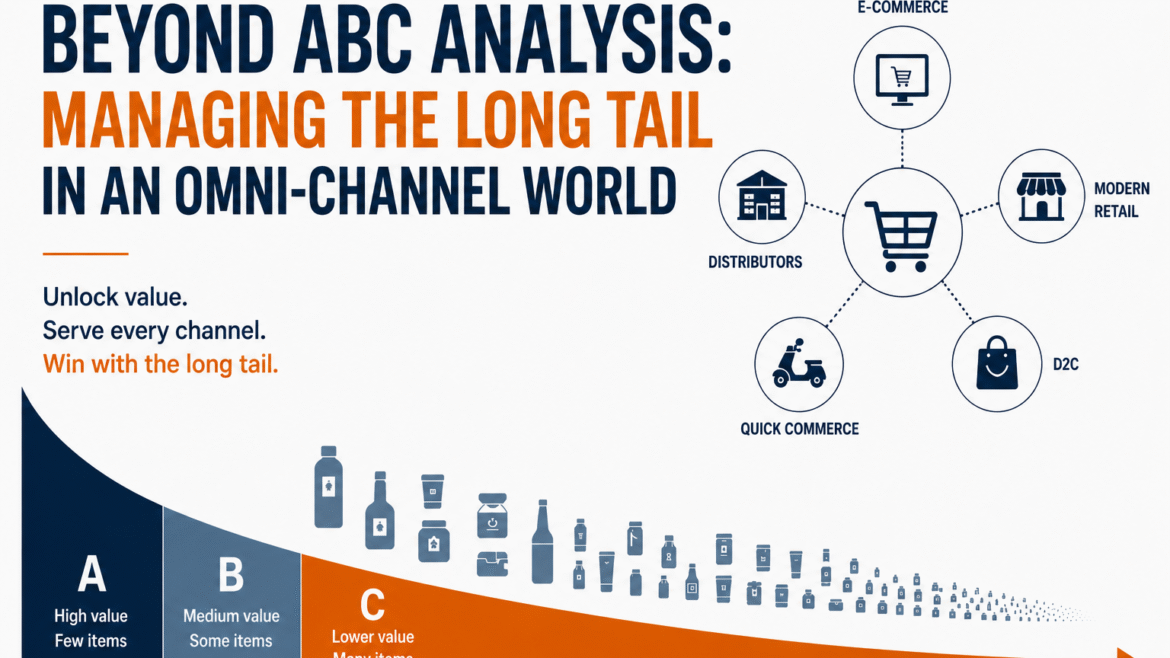
Most supply chains still rely heavily on ABC analysis: Fast movers become A-items, Medium movers become B-items, and Slow movers become C-items.

While useful, this approach was designed for a simpler world. Today’s omni-channel environment requires a richer understanding of SKU behaviour. A slow-moving SKU can still be strategically important. A seasonal product may have low annual volume but extremely high demand concentration during specific periods. A marketplace-exclusive pack may contribute little revenue but help improve search visibility and consumer acquisition. Treating all slow-moving products the same often leads to poor decisions.

Traditional ABC analysis answers only one question: How much does a SKU sell? Unfortunately, modern supply chains need to answer several additional questions. Is demand predictable? Is the SKU strategically important? Does it carry high obsolescence risk? Does it move frequently enough to justify frequent replenishment? These questions require a broader classification framework than sales volume alone.

A More Practical Framework for Long-Tail Management

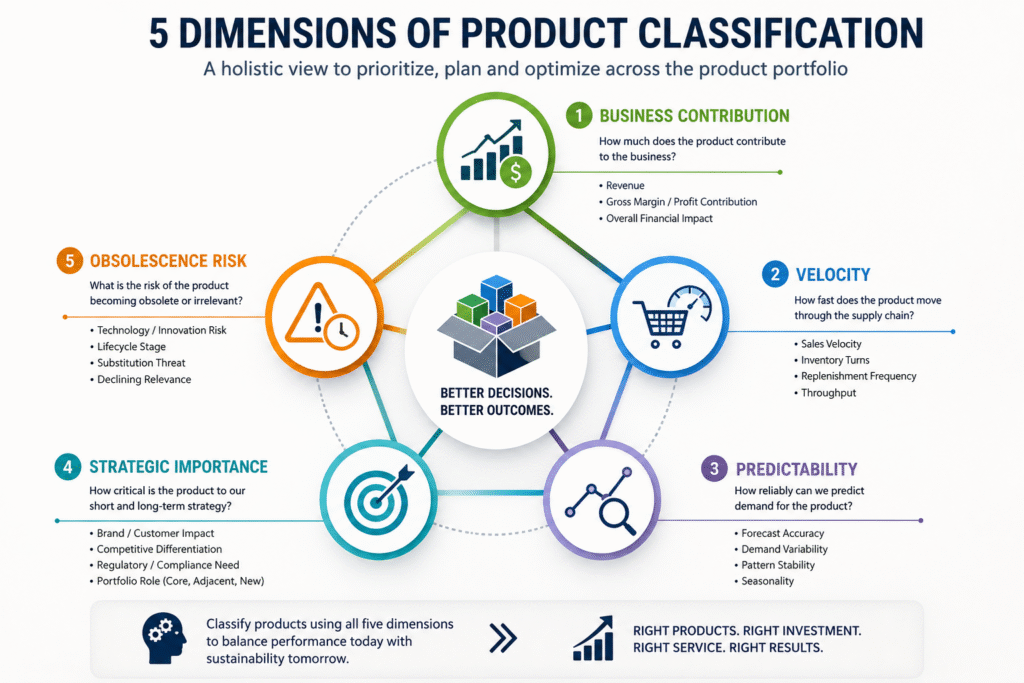
Instead of classifying products solely by volume, organisations should evaluate SKUs across five dimensions.

1. Business Contribution

How much does the SKU contribute to the revenue? This is a traditional ABC Pareto analysis, with A, B, and C category SKUs contributing 80%, 15%, and 5% of revenue, respectively. This classification helps the planner identify the SKUs that drive sales. The exact cut-off could be modified to 60-30-10 or 70-20-10 depending on the business. In some of the businesses, profit contribution is considered instead of revenue.

2. Velocity

How quickly does the SKU move? Velocity is usually measured using the frequency of the orders. Another term the industry uses is “runner,” “repeater,” or “stranger.” This remains important because velocity directly influences inventory turns, replenishment frequency, and warehouse handling requirements.

3. Predictability

How stable is demand? This is measured by the uniformity of the orders throughout the year. Some products exhibit consistent demand patterns while others are highly seasonal, promotion-driven, or event-driven. SKUs could be classified as regular, irregular, seasonal, or sporadic. Similarly, if the SKU is forecastable or non-forecastable. Two SKUs with identical annual volumes may require completely different inventory policies if their demand profiles differ.

4. Strategic Importance

What role does the SKU play in the portfolio? Certain products may be critical despite low sales volumes. Examples include premium variants, marketplace exclusives, hero products, or strategic new launches. Revenue contribution alone does not determine business importance. Often, there are flagship products that define the company’s competitive position. Sometimes, the product needs to be planned as part of portfolio completion.

5. Obsolescence Risk

How likely is inventory to become unsellable? This is particularly relevant in FMCG categories with shelf-life constraints. Low-velocity products with short shelf life require very different planning policies than low-velocity products with long shelf life.

These five dimensions create a more meaningful basis for segmentation and decision-making than traditional ABC analysis alone.

The Hidden Cost of Long-Tail SKUs 

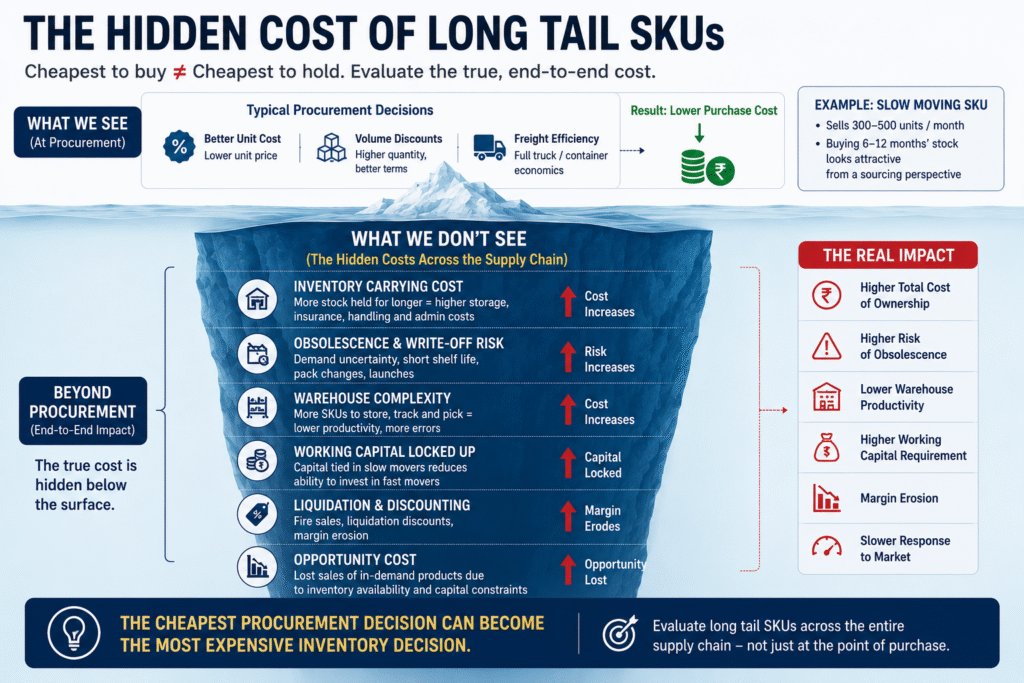
One of the most common mistakes organisations make is focusing exclusively on procurement economics. 

Procurement teams often seek larger purchase quantities to improve unit costs, secure volume discounts, or optimise freight economics. While this may reduce purchase costs, it can significantly increase inventory carrying costs, obsolescence risk, warehouse complexity, and working capital requirements. 

In many situations, the cheapest procurement decision becomes the most expensive inventory decision. In many situations, the cheapest procurement decision becomes the most expensive inventory decision.

Purchasing six or twelve months of inventory may appear attractive from a sourcing perspective. However, the resulting inventory exposure can lead to write-offs, liquidation discounts, excess warehouse occupancy, and capital locked in stock that may never be sold. 

Every additional long-tail SKU also consumes planning bandwidth through forecasting, exception management, parameter maintenance and master data administration. 


The economics of long-tail products must therefore be evaluated across the entire supply chain rather than within procurement alone.

Different SKUs Require Different Service Levels

Another common practice is applying similar service targets across the portfolio. Many organisations target 95% availability for virtually all products. While appropriate for core fast-moving products, this approach often creates unnecessary inventory investment for long-tail items.

Service levels should not be determined by sales volume alone. They should reflect the product’s business contribution, lifecycle stage, strategic importance and channel role.

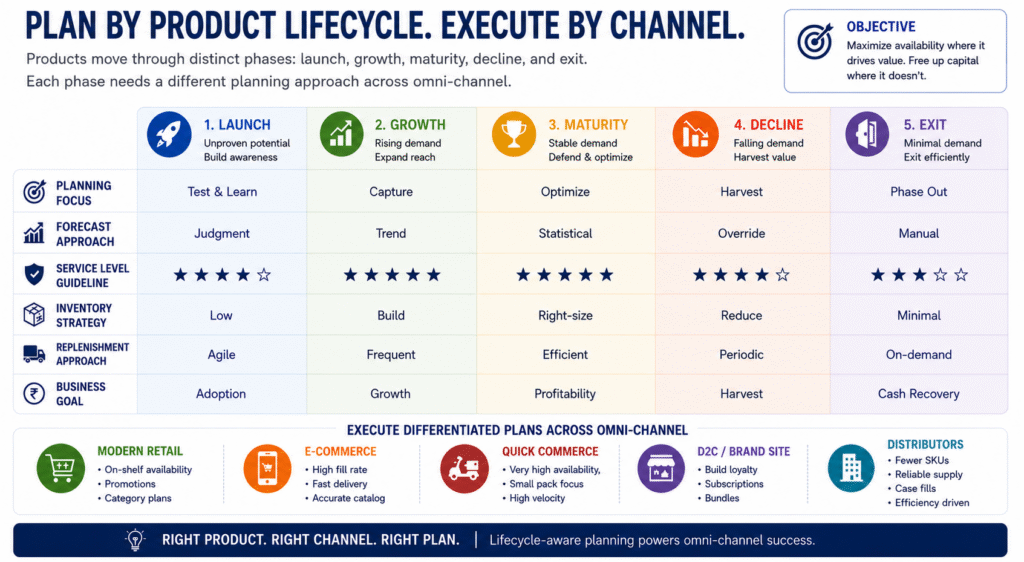
A more effective approach is differentiated service management. Core products may warrant service levels above 90-95%. Growth products may require 95–98%. Strategic niche products may operate at slightly lower levels. Low-priority long-tail products may justify even more selective inventory policies. The product on exit will not even have service level targets and probably will have as low as 30-50% service levels. The objective is not to reduce service indiscriminately. It is to align service expectations with business value.

Lifecycle Management Matters

Perhaps the most overlooked aspect of long-tail management is lifecycle tracking. Products move through distinct phases: launch, growth, maturity, decline, and exit. Yet many organizations continue using the same planning parameters throughout the product’s life.

As products mature and demand patterns change, inventory policies, service levels, replenishment frequencies, and sourcing strategies should evolve accordingly. Lifecycle-driven planning helps organizations reduce obsolescence risk while maintaining availability where it matters most.

Lifecycle transitions should automatically trigger changes in planning parameters rather than relying on manual planner intervention.

What We Commonly Observe 

Across consumer goods, food and beverage, personal care, retail, fashion, and consumer durables sectors, a recurring pattern emerges. Although the exact numbers vary, we frequently observe that roughly 20–25% of SKUs generate most of the revenue, while the remaining long tail drives a disproportionate share of inventory, planning effort and warehouse complexity. 

However, the answer is rarely wholesale rationalisation. Organisations that achieve the best results are those that develop differentiated policies for different SKU segments balancing availability, working capital, service, and profitability according to the characteristics of each product. 

Conclusion 

The growth of e-commerce, quick commerce, and DTC channels has made the long tail a permanent feature of the modern FMCG landscape. Consumers expect choice, and digital platforms reward breadth of assortment. The question is no longer whether organisations should carry long-tail SKUs. The question is how intelligently they manage them. 

The future belongs to companies that move beyond traditional ABC analysis and adopt differentiated approaches to inventory, sourcing, service levels, and lifecycle management. Competitive advantage in an omni-channel world will not come from carrying fewer SKUs. It will come from understanding which SKUs deserve different supply chain policies—and having the discipline to execute them consistently. 

About the Authors

Qwixpert is a boutique management consulting firm focused on building Future-Fit Supply Chains. The firm works with organisations across consumer goods, retail, fashion, industrial products, and aftermarket sectors to improve agility, inventory productivity, fulfilment performance, and supply chain decision-making.

Through more than 100 consulting engagements across 16 industries, the team has observed how digital channels, changing consumer behaviour, and rising service expectations are redefining the role of supply chains.

This article is part of a broader series exploring the implications of these shifts in trade channels and the capabilities organisations need to build for the future.

Inventory Management

The Inventory Paradox: Why More Inventory is Delivering Less Availability

The Inventory Paradox: Why More Inventory is Delivering Less Availability 2560 1440 qwixpertadmin
Executive Summary

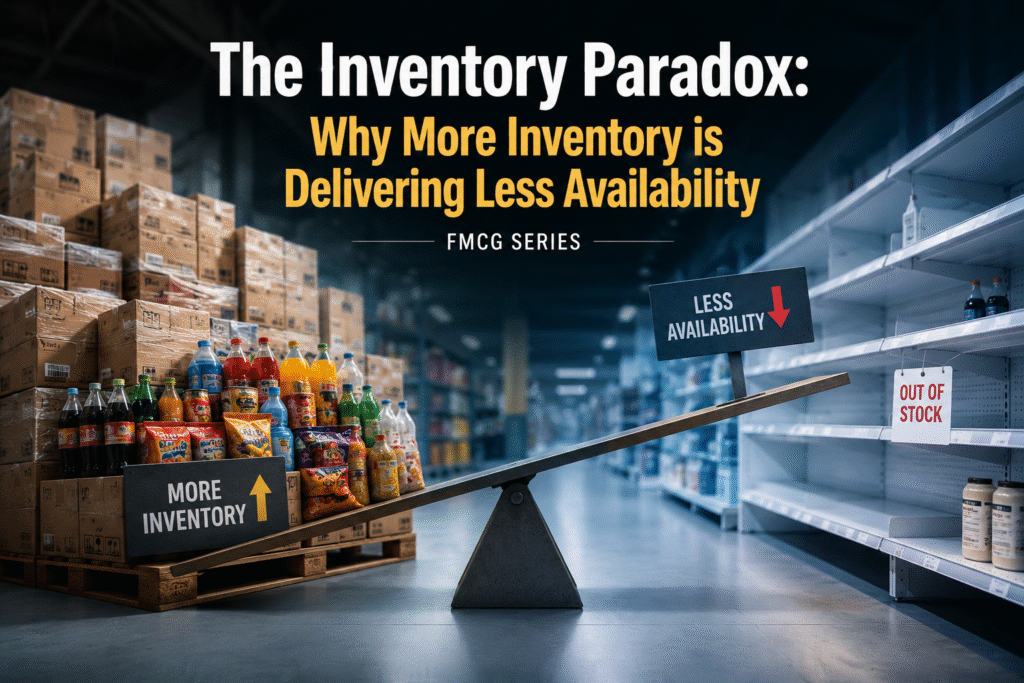
As FMCG companies expand across general trade, modern trade, e-commerce, quick commerce, and D2C channels, inventory is increasingly being distributed across more nodes, locations, and fulfilment models. The result is a paradox: despite carrying higher overall inventory, companies often struggle to maintain product availability.
This fragmentation reduces inventory pooling benefits, increases stock imbalances, and creates simultaneous situations of excess stock in one location and stock-outs in another. Traditional inventory planning approaches are often unable to keep pace with the complexity.
Improving availability today requires smarter inventory positioning, dynamic replenishment and network-wide visibility, not simply holding more stock.

A supply chain leader recently shared a frustration that is becoming increasingly common across consumer industries. “Over the last two years, inventory had increased significantly. Warehouses were fuller, working capital was under pressure, and inventory carrying costs were rising. Yet service levels were not improving. Stock-outs continued on key e-commerce platforms, quick commerce fill rates remained inconsistent, and customers were still complaining about product availability.”

Inventory Management

At first glance, this appears contradictory. Conventional supply chain wisdom suggests that more inventory should improve service levels. However, many FMCG, retail, and consumer goods companies are discovering that the relationship between inventory and availability is no longer as straightforward as it once was. The reason lies in a phenomenon that is becoming increasingly prevalent across modern supply chains: inventory fragmentation.

When Inventory Was Simpler

Historically, FMCG supply chains operated through relatively straightforward distribution structures. Products moved from manufacturing plants to regional warehouses, then to distributors and retailers. Inventory was concentrated within a limited number of nodes, and distributors absorbed a significant portion of demand variability and inventory risk.

Under this model, increasing inventory often improved service levels. The inventory was pooled, visible, and relatively easy to deploy where needed. The mathematics of inventory pooling worked in the industry’s favour. A single inventory pool serving multiple customers required less safety stock than multiple independent inventory pools. As a result, organisations could improve availability without proportionately increasing inventory.

That logic is now being challenged.

The Rise of Inventory Fragmentation

The rapid growth of e-commerce marketplaces, quick commerce platforms, B2B e-commerce networks, and Direct-to-Consumer (DTC) channels has fundamentally altered how inventory is deployed.

Inventory is no longer concentrated within a few warehouses and distributor locations. Instead, it is spread across a growing network of fulfilment centres, dark stores, partner distribution centres, and channel-specific inventory pools.

The same SKU may simultaneously exist in:

  • General Trade distribution networks
  • Modern Trade distribution centres
  • Marketplace fulfilment centres
  • Quick commerce partner warehouses
  • Dark stores
  • DTC fulfilment centres
  • Third-party logistics facilities

While overall inventory may be increasing, the inventory available to serve a specific demand signal may actually be declining. This creates what many organisations are experiencing today: rising inventory coupled with stagnant or deteriorating service levels.

Understanding the Four Dimensions of Inventory Fragmentation

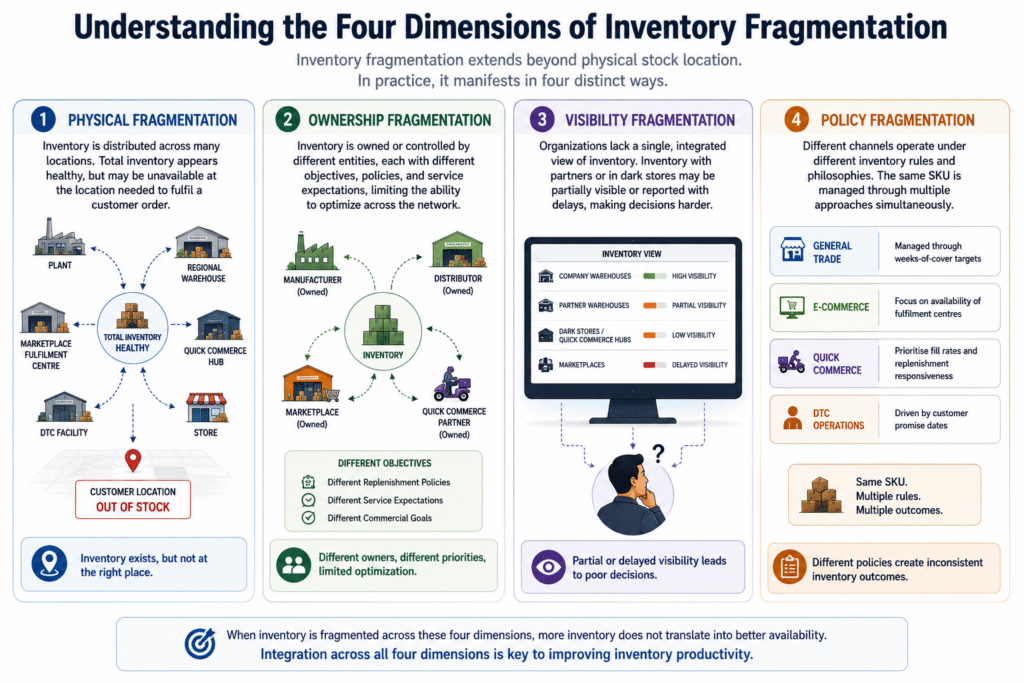
Inventory fragmentation extends beyond physical stock location. In practice, it manifests in four distinct ways.

Understanding the Four Dimensions of Inventory Fragmentation

1. Physical Fragmentation

The most visible form of fragmentation occurs when inventory is distributed across a large number of locations. A company may hold inventory across plants, regional warehouses, marketplace fulfilment centres, quick commerce hubs, and DTC facilities. While total inventory appears healthy, the inventory required to fulfil a specific customer order may be unavailable at the relevant location.

2. Ownership Fragmentation

Not all inventory is owned or controlled by the same entity. Some inventory may be owned by distributors, marketplaces, quick-commerce partners, or the manufacturer itself. Each stakeholder operates under different objectives, replenishment policies, and service expectations. As ownership becomes fragmented, so does the ability to optimize inventory across the network.

3. Visibility Fragmentation

Many organizations still lack a single, integrated view of inventory. Inventory within company-owned warehouses may be highly visible, while inventory within partner networks, dark stores, or marketplaces may only be partially visible or reported with significant delays. Decision-making becomes increasingly difficult when planners cannot see the entire inventory landscape.

4. Policy Fragmentation

Perhaps the most overlooked challenge is that different channels operate under different inventory rules. General Trade may be managed through weeks-of-cover targets. E-commerce platforms may focus on the availability of fulfilment centres. Quick commerce players prioritise fill rates and replenishment responsiveness. DTC operations are driven by customer promise dates. The same SKU is therefore managed through multiple inventory philosophies simultaneously.

Why More Inventory Often Fails to Solve the Problem

When service levels decline, many organisations instinctively increase inventory. Unfortunately, fragmented supply chains often convert this additional inventory into additional inefficiency rather than additional availability.

Consider a simple example. Inventory may be abundant within the General Trade network while a marketplace fulfilment centre experiences stock-outs. From an enterprise perspective, inventory exists. From the customer’s perspective, the product is unavailable. Similarly, inventory may be trapped within one quick commerce platform while another experiences shortage. Products may be available in one region but unavailable in another. Excess inventory may coexist alongside lost sales.

The issue is not inventory sufficiency. It is inventory placement. This distinction is becoming increasingly important as channels proliferate and customer expectations continue to rise.

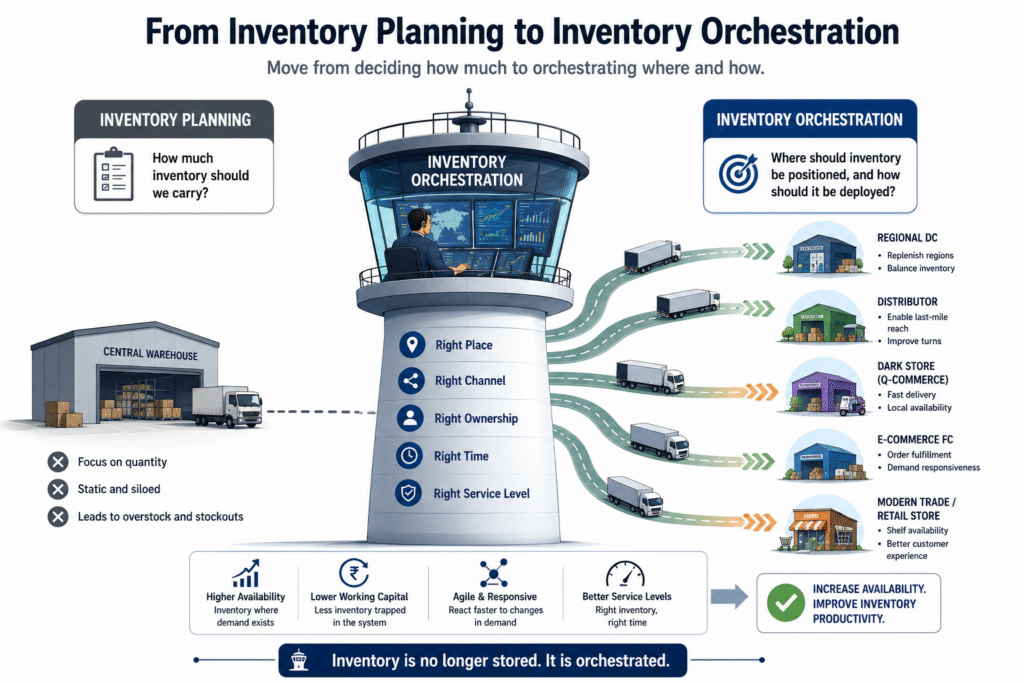
From Inventory Planning to Inventory Orchestration

Many organisations still approach inventory management as a planning problem. The primary question remains: “How much inventory should we carry?”

From Inventory Planning to Inventory Orchestration

An increasingly important question is emerging: “Where should inventory be positioned, and how should it be deployed?” This represents a shift from inventory planning to inventory orchestration. Inventory orchestration focuses on coordinating inventory across locations, channels, ownership structures, and service requirements. The objective is not simply to increase stock levels, but to improve inventory productivity.

Organisations that excel at inventory orchestration are able to balance availability and working capital simultaneously, rather than trading one against the other.

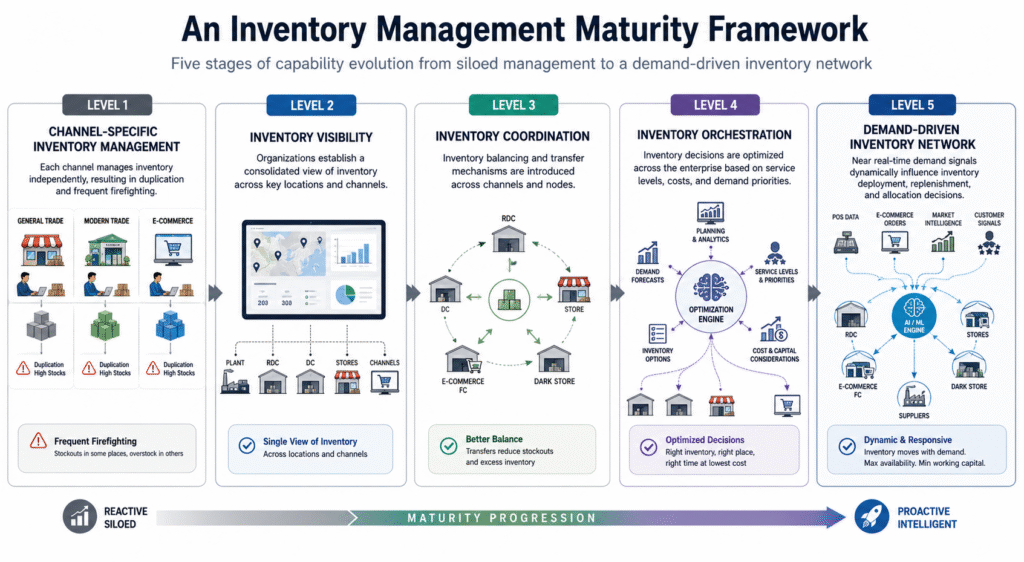
An Inventory Management Maturity Framework

An Inventory Management Maturity Framework

As organisations evolve their inventory capabilities, they typically move through five stages.

Level 1: Channel-Specific Inventory Management
Each channel manages inventory independently, resulting in duplication and frequent firefighting.

Level 2: Inventory Visibility
Organizations establish a consolidated view of inventory across key locations and channels.

Level 3: Inventory Coordination
Inventory balancing and transfer mechanisms are introduced across channels and nodes.

Level 4: Inventory Orchestration
Inventory decisions are optimized across the enterprise based on service levels, costs, and demand priorities.

Level 5: Demand-Driven Inventory Network
Near real-time demand signals dynamically influence inventory deployment, replenishment, and allocation decisions.

Few organizations have reached the highest levels of maturity, but many are beginning to recognize the need to move beyond traditional inventory planning approaches.

What We Commonly Observe

Across FMCG, food and beverages, personal care, retail, fashion, consumer durables, and aftermarket sectors, a recurring pattern emerges. Inventory growth frequently outpaces sales growth. Service challenges persist despite rising inventory investment. Different channels maintain separate inventory buffers. Visibility remains fragmented. Inventory transfer decisions are often slow and reactive. Most importantly, organizations continue attempting to solve availability problems by adding inventory rather than improving inventory deployment. This approach becomes increasingly expensive as channels proliferate.

Conclusion

The challenge facing modern supply chains is no longer inventory sufficiency. It is inventory placement. As new-age channels continue to grow, inventory will inevitably become more distributed, more fragmented, and more difficult to manage. Organizations that continue to address service challenges by simply adding inventory will find themselves carrying higher working capital with diminishing returns.

The leaders of the future will be those who can orchestrate inventory across channels, locations, ownership structures, and service requirements—delivering higher availability with lower inventory investment.

In an omni-channel world, competitive advantage comes not from holding more inventory, but from deploying inventory more intelligently.

Rising Spirits: The Surging Popularity of Indian Single Malt Whisky

Rising Spirits: The Surging Popularity of Indian Single Malt Whisky 2560 1706 qwixpertadmin

Executive Summary:  

This article talks about the ballooning demand for Indian Single Malts India & global markets. Growing demand has come on the back of fruiter, less smoky taste & favourable price compared to other whiskeys. The growing demand has led to new product launches & capacity expansion. Indian Whiskey makers can leverage the tailwinds through product innovation & image makeover of whiskeys in India to target millennials similar to how Japanese & Chinese whiskey makers have popularized their whiskeys. 

Single Malt is a niche segment that is rapidly expanding at 18% YoY growth due to the trend of premiumisation 

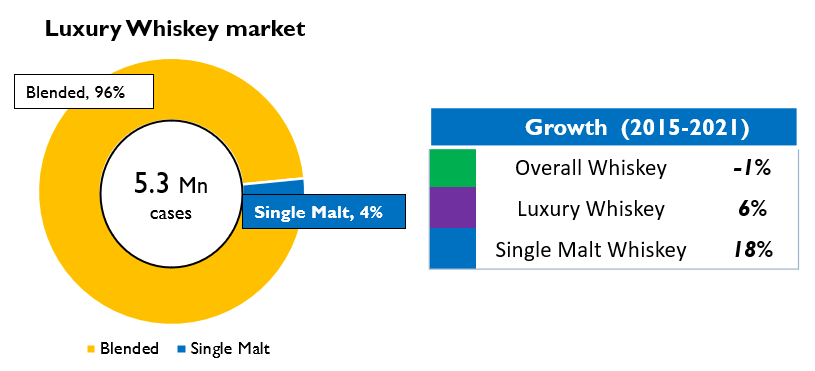
The Indian Luxury whiskey market is a niche market with sales of 5.3 Mn cases in 2021. It has grown 6% YoY (volume) compared to the degrowth of -1% in the overall whiskey market during the same period. The growth can be attributed to premiumization of the consumption ecosystem.  

The Luxury whiskey market is dominated by blended whiskeys – 96% share and an emerging Single Malt market with 4% share (Figure 1). Despite being a niche, Single Malt market has gained notable prominence in the past six years, outgrowing any other whiskey segment with a healthy 18% YoY growth. As a result, it has doubled its market share in luxury segment from 2% in 2015 to ~4% in 2021 

Figure 1: Luxury whiskey market growth and components 

Single Malts originated in Scotland around 15th century, but its sales were limited to the United Kingdom. In the last century, Single Malts gained global recognition as a premium whiskey, motivating whiskey producers in countries such as United States of America, Australia, Japan, and Taiwan to make their own version of Single Malts. Following the trend, the Indian company Amrut distilleries launched the first Indian Single Malt in 2003. Since then, Indian Single Malts have become popular with more manufacturers investing in the segment.  

We believe that there is a profitable long-term game in the Indian Single Malt market and in this article, we examine the distinctive features of the product that have led to market creation and recommend potential strategies for top-line growth.  

Indian Single Malts are growing at 37% YoY backed by their unique flavour profile, economical pricing, and captive sales channel 

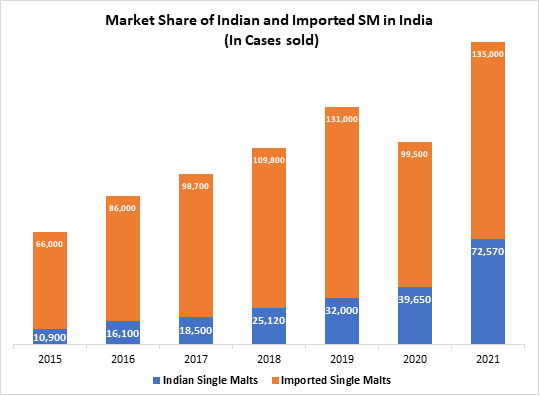
The Single Malt market in India is currently dominated by Imported Scotch Single Malts with 65% market share and Indian Single Malts at 35% market share. Although Indian Single Malts is more nascent, it’s been growing 37% YoY over the last 6 years, compared to 13% growth rate for Imported single malts. The share of Indian single malts has increased from 15% in FY15 to 36% in FY21 (Figure2).  

Figure 2: Market share of Indian and Imported Single Malts in India 

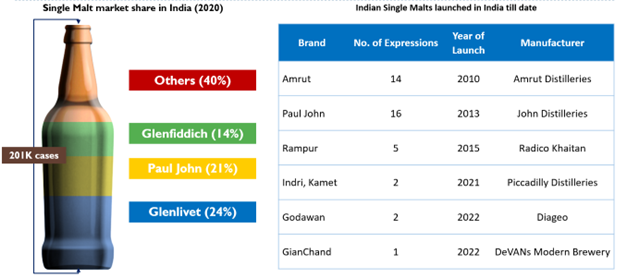
The key brands in Single Malt in India are: French liquor manufacturer Pernod Ricard’s Glenlivet with ~24% market share, Indian player John Distilleries’ Paul John with 21% market share and Glenfiddich from Scottish distiller William Grant and Sons with 14% market share. Others includes Scotch Single Malts such as Macallan by the Macallan distillery, Singleton by Diageo and Indian Single Malts such as Amrut by the Amrut Distilleries and Rampur by Radico Khaitan (Figure 3).  

Figure 3: Key Players in Indian Single Malt market 

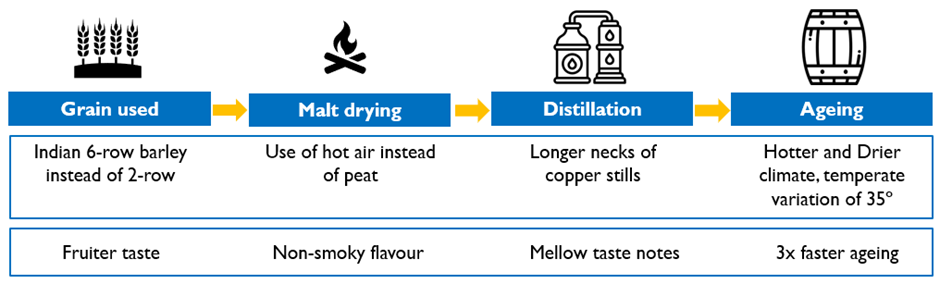
The tremendous growth for Indian Single Malts in the domestic market can be attributed to its distinct taste profile, economical pricing, and captive sales channels. The distinction in taste arises from the differences in the raw material, production processes and climatic conditions between India and Scotland (Figure 4) 

Figure 4: USP of Indian Single Malt 

These India-specific features cumulatively give Indian Single Malts a fruiter and non-smoky flavour with mellow taste notes as compared to smoky scotch single malts which are generally heavier on the palate. According to Hemant Rao, Founder of Single Malts Amateur Club (SMAC), these features ensure that Indian Single malts are easier on the palate for young drinkers and suits the taste preferences of Indian consumers. Further, the 3x faster ageing ensures that the inventory turnaround is relatively faster, and companies can react to emerging market trends more quickly. 

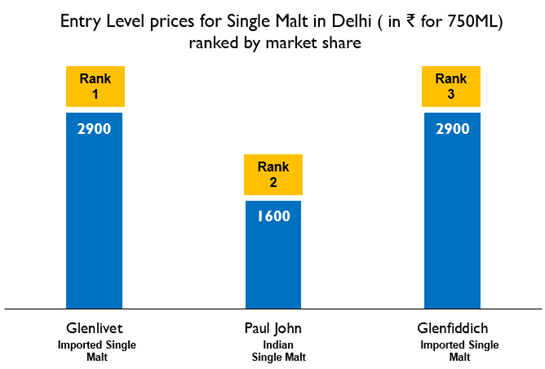
Aiding the growth of Indian Single Malts, the 150% Import duty on Imported Malts creates a considerable price difference between Indian and Imported Single Malts where Indian Single Malts are available at ~60% of the price of Imported Single Malts across India (Figure 5).  

Figure 5: Price comparison between Indian and Imported Single Malts 

The price differential has translated into increase in sale for Indian Single Malt manufacturers. Paul John, which introduced entry level Indian Single Malts in the market and is credited for democratizing the market, holds a 60% market share in Indian Single Malts market in India and is the only Indian Single Malt brand in top three Single Malt brands sold in the country. 

Indian Single Malt industry has received support from Government as well, the ban of foreign liquor in 4000+ army canteens across the country has created a captive market for Indian Single Malts. It is projected to replace the Rs.  140 Cr. worth of sales imported alcohol clocked in FY2020 from army canteens.  

All these factors together have cumulated in creating an unexpected surge in demand for Indian Single Malts resulting in supply shortage. Pioneers such as Amrut, Paul John or Rampur have been facing shortages or stock-outs in the domestic market. For instance, Amrut sold out its annual inventory of 33,000 cases in the first five months of FY22. Similarly, sales of Rampur Single Malt are constrained to Delhi-NCR region and select five-star properties due to supply shortages. Mr. Sanjeev Banga, president of international business at Radico Khaitan expects the shortage to persist till FY24. 

Demand for Indian Single Malt have outpaced the supply and Industry is reacting by investing in capacity expansion and product launch

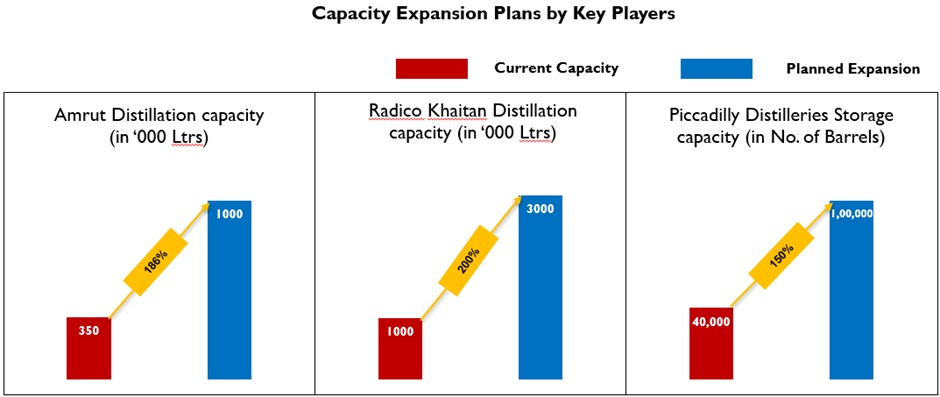
To counter the supply shortages, strategic planning and capacity expansion spanning over long-term horizon will be crucial due to the bottleneck caused by long production and aging process. In line with this, the major players have already started investing in production and storage capacity (Figure 6) 

Figure 6: Capacity Expasion by Indian Single Malt Manufacturers

The extremely attractive domestic demand prospect has led to new product launches by global alco-bev manufacturers and non-legacy players. Diageo which has a portfolio of popular Scotch Single Malts such as Talisker and Singleton, launched their first Indian Single Malt named Godawan with the expectations that Indian Single Malt Market will overtake Imported Single Malts in upcoming years.  

Distilleries such as Piccadilly and DeVANS Modern Breweries, which traditionally produced and sold malt spirits and distilled ENA to whiskey manufacturers, have launched Indian Single Malts under their own brand name i.e. Indri Trini and Gianchand respectively. The brands have been well-received and have gotten accolades from across the globe. Recently, Jagatjit Industries, makers of popular aristocrat whiskey have also announced their plans to enter Single Malt whiskey market in India. 

The recent investments in capacity and entry of new players indicates that by 2026-27, the annual supply of Indian Single Malt would reach around 600,000 to 700,000 thousand cases, which is around 9-10 times the current demand for Indian Single Malts. To match the supply planned for Indian Single Malts by the manufacturers over the next 5 years, the market demand would have to grow 54% YoY against the 37% growth it has clocked over the last 5 years. To cater to the growth momentum, we believe the organic demand growth should be aided by investment in market development  

Whiskeys need an image makeover to appeal to a larger target segment, Indian Single Malts can learn from global counterparts –  

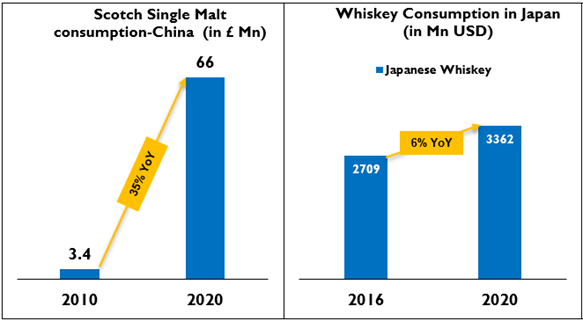
For market development, we believe that adopting best practises from emerging whiskey markets like China, Japan and Taiwan can be insightful as they also went through a rapid growth phase (as indicated in Figure 5).  

Figure 7: Growth of Single Malts Whiskeys in emerging markets 

While Scotch whiskeys have a strong taste and incline towards smoky flavour; Japanese whiskeys are known for a softer taste with floral and fragrant notes. Japanese Whiskey makers also offer a variety of flavours – for instance, manufacturer Yamazaki can produce up to seventy styles of malt whisky in house, using seven different types of stills, five types of casks, and two types of fermentation. Similarly, the top selling Taiwanese whiskey called Kavalan Classic has a mellow flavour than a typical single malts and is often compared to fruit jam. As mentioned by Lee Yu-Ting, CEO of Kavalan’s umbrella company, the company doesn’t want the whiskey to taste like medicine.  

There are four major factors leveraged by global single malt manufacturers – product differentiation in terms of taste profiles, shifting target segment to young population and women, liberalising the image around single malts and increasing awareness through engagement marketing.  

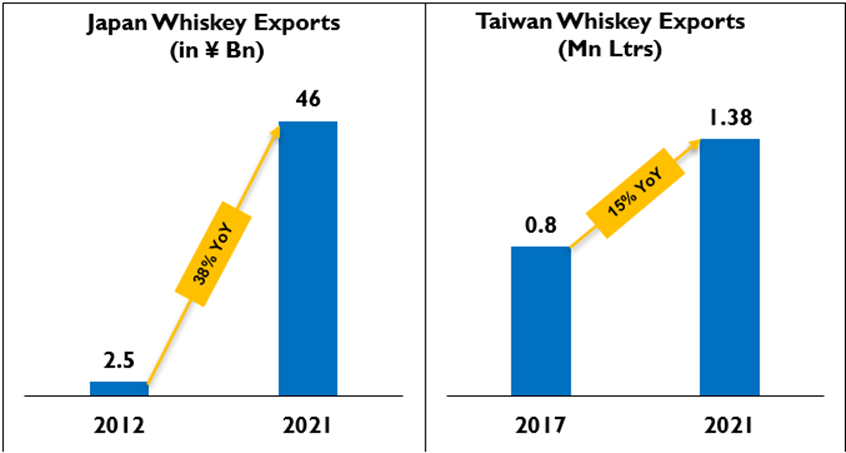
The distinct and sweeter taste profile of these whiskeys is loved by the whiskey drinkers all over the world, including India – evident by the growth of export for these whiskeys (indicated by figure 6). Japanese whiskeys makers like Beam Suntory have launched the premium portfolio in 2019 for top tier Hotel chains, premium bars and restaurants in India and have already sold more than three lakh cases of Japanese whiskeys since then. There is a strong play for the inherently fruiter Indian single malts to develop a wider range of flavours that can gain a strong foothold in the Indian market. 

Figure 8: Growth of Japanese and Taiwanese whiskey exports 

Growth of disposable income in the millennials and change in the perception of whiskey that it’s a men’s drink has led to the growth of non-traditional consumer segments in emerging markets. For instance, in China the imports for scotch single malts by 20x in the last decade due to growing demand from young customers and increased per capita consumption from women drinkers (1.6 Ltrs in 2005 vs 3 Ltrs in 2028). Similarly, Indian Single Malt manufacturers can redefine the target segments to include the burgeoning segment of young customers. By leverage on the social drinking and experimental tendencies of the youth, they can introduce consumers to whiskey early in their lifecycle and attract a larger customer base of millennials and women. 

To appeal to the new-age consumer segment, Japanese whiskey makers have liberalised the stiff image associated Single Malts by promoting single malts as craft cocktail. In 2008, Suntory, the biggest Whiskey producer in Japan, ran an advertising campaign to promote the consumption of highballs – a cocktail that can be made with blended or single malt whiskey and soda. This introduced Single Malts as a fun casual drink for the younger generation, as opposed to being an older “salarymen’s” drink. The Highball campaign proved to be highly successful, increasing the sales of base whiskey by 70% in the following year. Similarly single malts have been used to elevate the depth and flavour of cocktails such as Hot Toddy, Penicillin or whiskey and coke.  

Engagement marketing activities such as tasting seminars, stalls at whiskey exhibitions, partnering with whiskey fan clubs and developing whiskey bars has been a successful marketing strategy for Global Single Malt players. For instance – Taiwanese whiskey maker Kavalan opened branded whiskey bars and liquor stores in China to promote their whiskeys. Even global players such as Diageo and Glenfiddich have partnered with millennial YouTubers to educate young customers about single malts whiskeys and the preconceptions around it.  

Indian Single Malts are well positioned to follow suite the global trends due to the distinct fruity flavour, emerging theme of premiumisation and a favourable demographic of millennials. Hence, by doubling down on the advantages of Indian Single Malts, coupled with experiential marketing tactics can go a long way in exploring the exciting opportunities this nascent yet vibrant segment has for offer.  

Conclusion 

Due to an inherently unique product and driven by strong market factors like economical pricing, captive canteen markets and favourable demand conditions, the Indian Single Malt market has been growing at tremendous pace. As shortages and stock-outs of Indian Single malts prevail in the market due to unexpected demand surge, manufactures have resorted to capacity expansion projects and additional investments by new players (domestic and foreign). We believe that investment in market is also important to continue this growth momentum look towards the emerging markets like Taiwan and Japan for best practises. Indian Single malt manufactures should experiment with new flavours that can appeal to a larger target segment consisting of women and younger demography; cocktails using Indian Single Malts can help position the beverage as a casual party drink and experience marketing using tasting clubs or exclusive whiskey bars to reach the target segment. We strongly believe that exploring the potential of the segment and committing a long-term play can yield favourable results. 

Authors: Jitendra Maheshwari and Vasupradha Sridharan